
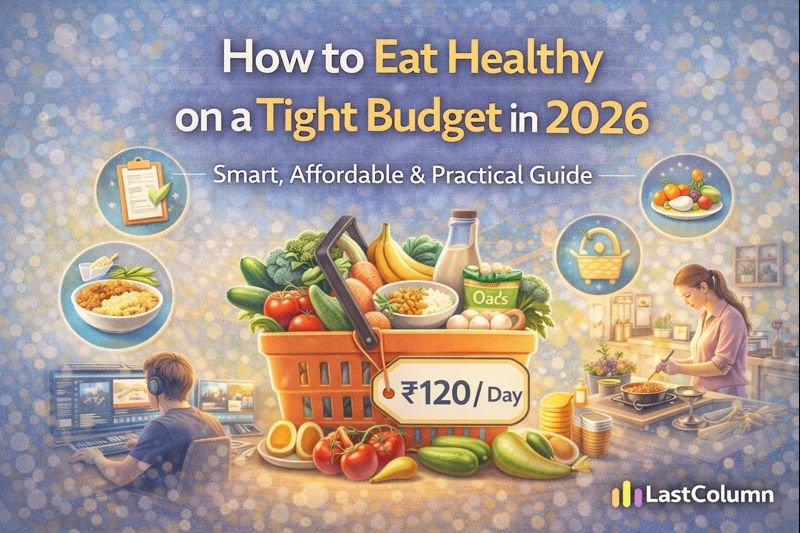
Many people think eating healthy is expensive. Organic foods, fancy salads, and diet plans can quickly drain your wallet.
But here’s the truth: Healthy food doesn’t have to be costly. Smart choices matter more than money.
With proper planning and simple habits, you can eat nutritious meals without overspending. This guide shows you exactly how to eat healthy on a tight budget in 2026 using practical, real-life strategies.
Why Healthy Eating Feels Expensive (But Isn’t)
Common mistakes people make:
- Buying packaged “health foods”
- Ordering takeout often
- Wasting groceries
- No meal planning
These habits are more expensive than cooking simple home meals. Real healthy eating focuses on whole, basic, local foods.
You May Like: Weight Loss Indian Diet Plan for 2026 — Easy Meal Plan & Tips
Plan Your Meals Before Shopping
Meal planning saves the most money.
How to do it:
- Plan 5–7 meals weekly
- Make a grocery list
- Buy only what you need
This helps prevent impulse purchases, reduces food waste, and can save 20–30% on your monthly grocery costs.
Choose Budget-Friendly Healthy Foods
Healthy doesn’t mean exotic. Some of the affordable superfoods are:
- Rice
- Dal (lentils)
- Eggs
- Oats
- Seasonal vegetables
- Bananas
- Peanuts
- Curd
- Potatoes
- Sprouts
You don’t need expensive protein powders or imported fruits. These foods are cheap, filling, and packed with nutrients.
Buy Seasonal & Local Produce
Seasonal vegetables are:
- fresher
- healthier
- cheaper
Example:
- Winter → carrots, spinach, peas
- Summer → cucumber, watermelon, bottle gourd
Local markets are often cheaper than supermarkets.
Cook at Home (Biggest Money Saver)
Eating outside costs 3–4× more.
For example:
- Restaurant meal = ₹200–₹300
- Homemade meal = ₹40–₹60
Cooking at home:
- controls oil & sugar
- saves money
- improves health
Batch cooking on weekends saves time too.
Focus on Protein Without Overspending
Protein keeps you full longer and reduces junk cravings. Here are some protein sources that are far more affordable than meat or supplements:
- Eggs
- Lentils (dal)
- Chickpeas (chana)
- Soy chunks
- Peanuts
- Curd
Reduce Junk & Packaged Foods
Chips, sodas, and snacks are unhealthy and expensive. Instead try:
- roasted peanuts
- fruits
- boiled corn
- homemade snacks
These are better for health and budget.
Buy in Bulk for Staples
Buy monthly items in bulk:
- rice
- wheat flour
- oats
- lentils
Bulk purchases reduce cost per kg. Just store properly to avoid spoilage.
Simple Budget Meal Ideas
Breakfast
- Oats + banana
- Eggs + toast
- Poha/upma
Lunch
- Rice + dal + sabzi
- Curd rice
- Vegetable khichdi
Dinner
- Roti + vegetables
- Sprouts salad
- Light soup
Sample 1-Day Budget Diet Plan (Under ₹120)
| Meal | Food | Cost (approx) |
|---|---|---|
| Breakfast | Oats + banana | ₹20 |
| Lunch | Rice + dal + veg | ₹40 |
| Snack | Peanuts/fruit | ₹15 |
| Dinner | Roti + sabzi + curd | ₹45 |
Total: ~ ₹120/day
It’s affordable & nutritious!
Small Habits = Big Savings
- Carry homemade lunch
- Drink water (avoid sugary drinks)
- Freeze leftovers
- Use simple recipes
- Avoid food delivery apps daily
Rethink Your Eating Habits
“Healthy food is expensive”
“You need supplements”
“Only organic food is healthy”
The truth? Just simple home-cooked meals are enough. Learning how to eat healthy on a tight budget is about smart planning, not spending more money. You should focus on local foods by choosing simple meals, prioritizing home cooking, and maintaining consistency in what you eat.
After all, healthy eating should be sustainable, not stressful. Start small, plan weekly, and you’ll see both health and savings improve!