
Energy powers everything around us. We use it to light homes, run factories, and charge devices. However, traditional energy sources like coal and oil create pollution. Consequently, many countries now search for cleaner options.
This is where Renewable energy explained simply becomes important. Instead of complex science, think of it as energy that naturally refills. Additionally, it does not run out like fossil fuels. Therefore, it offers a safer and more sustainable future.
Let us break it down in plain language so anyone can understand.
Renewable energy explained simply: What does it really mean?
Renewable energy comes from sources that nature replaces quickly. Sunlight returns every day. Wind keeps blowing. Water keeps flowing. Consequently, these sources never truly finish.
In contrast, fossil fuels take millions of years to form. Once we burn them, they are gone. Additionally, they release harmful gases. Therefore, renewable energy reduces both shortage and pollution.
You can imagine renewable energy like a salary that arrives every month. However, fossil fuels are like savings that slowly disappear.
Main Types of Renewable Energy
Different natural sources create clean electricity. Each one works slightly differently. However, all share the same goal of sustainability.
The most common types include:
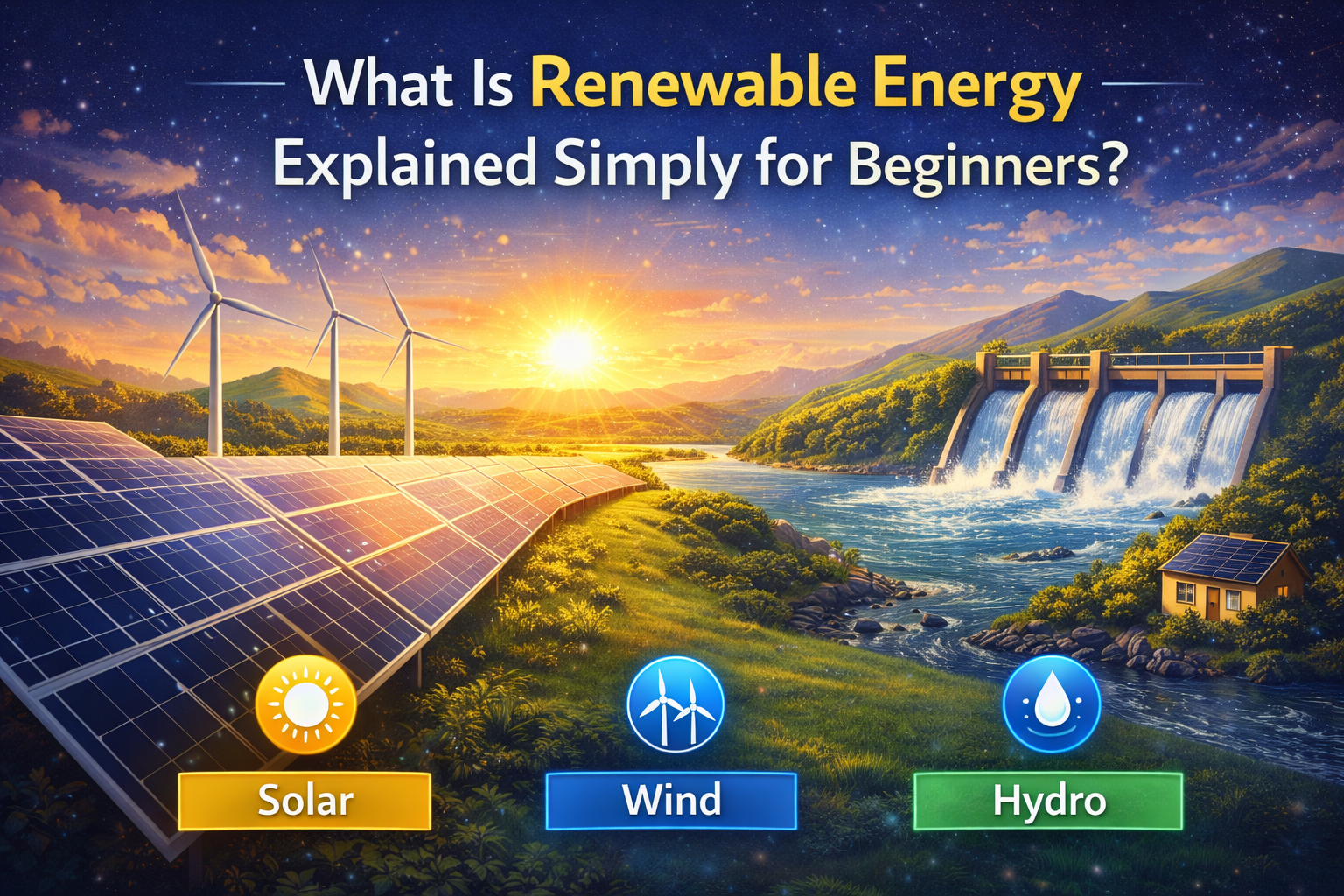
- Solar power from sunlight using solar panels
- Wind power using turbines that spin with air movement
- Hydropower from flowing water in rivers or dams
Consequently, countries often combine multiple sources for stability. Additionally, this mix reduces dependence on any single system.
Solar works well in sunny areas. Wind performs better in coastal or open land regions. Therefore, geography influences energy planning.
How Does Renewable Energy Work?
The process sounds technical, but the idea stays simple. First, natural forces create motion or heat. Then, machines convert that energy into electricity. Finally, the grid delivers power to homes and businesses.
For example, solar panels capture sunlight and turn it into electrical current. Similarly, wind turbines rotate and generate power. Consequently, electricity flows just like normal grid energy.
From the user side, nothing changes. You still flip a switch and get light. However, the source becomes cleaner and smarter.
Additionally, modern batteries now store extra power. Therefore, energy remains available even when the sun sets or wind slows.
Benefits for People and the Planet
Renewable energy offers many clear advantages. Moreover, these benefits affect both the environment and the economy.
Key benefits include:
- Lower pollution and cleaner air for cities
- Reduced electricity bills over time
- New jobs in installation and maintenance
Consequently, families save money while health improves. Additionally, governments create green jobs and attract investors.
Another benefit is energy independence. Countries can produce their own power locally. Therefore, they rely less on imported fuel.
Challenges You Should Know
Although renewable energy looks promising, it still faces challenges. However, technology improves every year. Consequently, these problems become easier to solve.
Solar and wind depend on weather conditions. Therefore, output may change daily. Additionally, initial setup costs can feel high for some households.
However, prices continue to fall. Governments also offer subsidies and incentives. As a result, adoption grows faster each year.
Battery storage and smart grids now help balance supply. Therefore, reliability improves steadily.
Why Renewable Energy Matters in 2026
Climate concerns grow stronger every year. Additionally, energy demand increases as populations rise. Consequently, cleaner solutions become urgent, not optional.
Businesses now prefer sustainable operations. Governments also set carbon reduction goals. Therefore, renewable energy moves from choice to necessity.
Homes with solar panels often sell faster. Cities with clean air attract more talent. As a result, green energy supports both lifestyle and economy.
Learning the basics helps you make smarter decisions as a consumer and citizen.
Conclusion
Energy shapes the future of every country. However, the type of energy we choose makes a big difference. Clean sources protect health, create jobs, and reduce costs.
When you think of Renewable energy explained simply, remember this idea. It is power that nature keeps giving back. Additionally, it supports both people and the planet. Consequently, switching to renewables becomes one of the smartest steps for 2026 and beyond.
Frequently Asked Questions(FAQ)
1. Is renewable energy cheaper than fossil fuels?
Yes. Initial setup may cost more. However, long term savings usually make renewable energy cheaper.
2. Can renewable energy power an entire home?
Yes. Solar panels or small wind systems can fully power homes with proper storage.
3. Which renewable source is best for beginners?
Solar power is easiest for most households because installation is simple and widely available.
Other Articles

ChatGPT vs Gemini vs Claude: Which AI Assistant Is Best in 2026?