
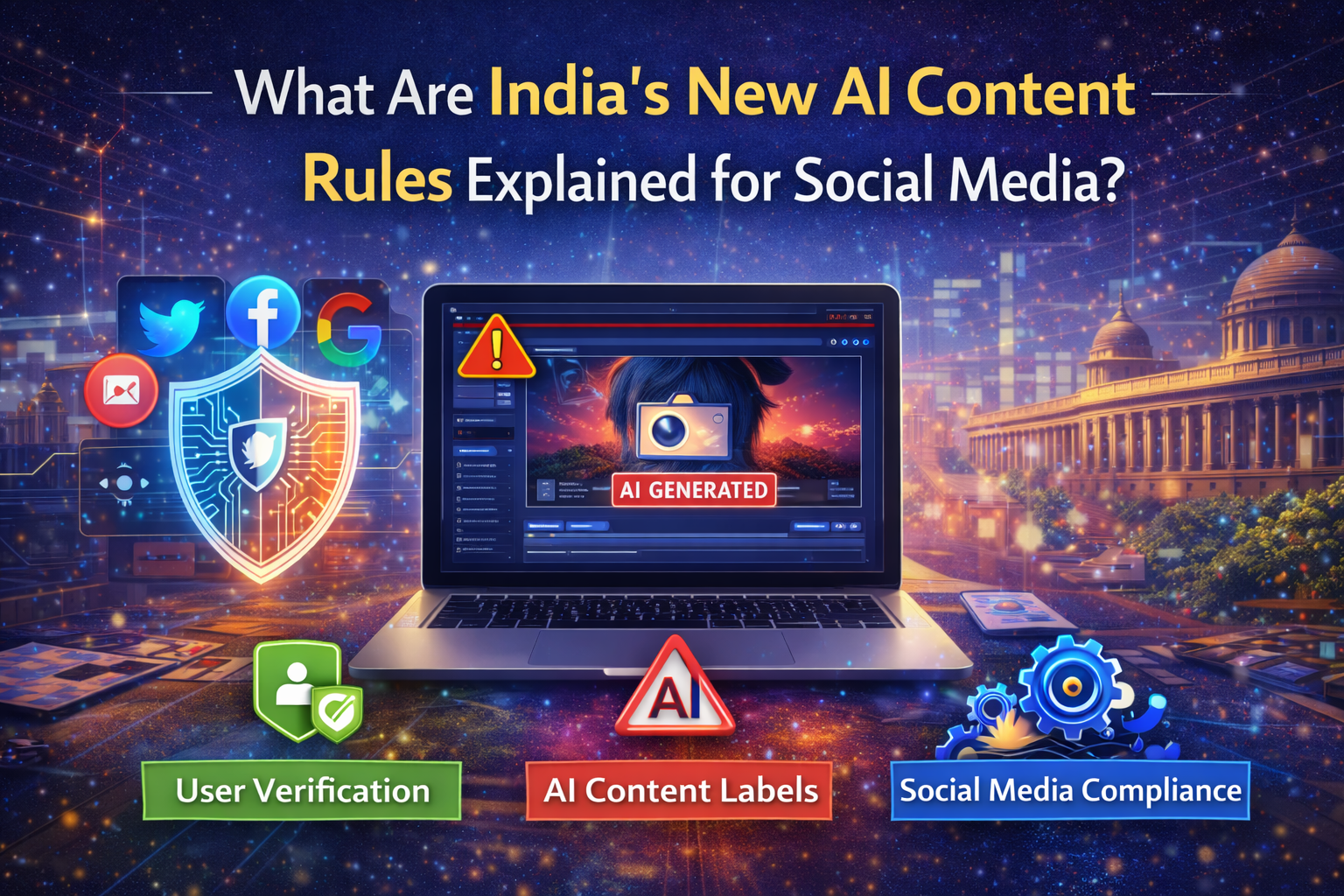
Artificial intelligence now creates posts, photos, videos, and even news within seconds. However, this speed also creates serious risks. Fake videos spread quickly, and misinformation confuses millions. Consequently, governments have started tightening digital regulations.
That is why India’s New AI Content Rules Explained has become important for creators, businesses, and everyday users. Additionally, these rules aim to improve transparency and protect people from deepfakes and scams. This guide explains the new framework in simple language so you understand what AI generated content means and what platforms must do.
Official Timeline and Enforcement Date
The government has already moved beyond proposals. Therefore, enforcement begins very soon.
The rules were notified on February 10 and officially come into force on February 20, 2026. Consequently, platforms must comply immediately instead of delaying updates.
This short timeline shows urgency. Additionally, it signals that regulators want faster action against misleading content. Users may soon notice new labels and upload checks across major apps.
These changes are directed by the Ministry of Electronics and Information Technology, which oversees digital safety and platform compliance in India.
What Is AI Generated Content?
AI generated content refers to any media created fully or partly by software. This includes text, images, voice, or video. For example, chatbots can write articles. Similarly, tools can create realistic faces or clone voices.
However, viewers often cannot tell whether the content is real or synthetic. Consequently, fake information can spread faster than ever. Deepfakes may damage reputations or mislead voters.
Therefore, regulators want clear identification. Labeling helps users judge authenticity before trusting or sharing posts. Additionally, transparency reduces panic and confusion online.
India’s New AI Content Rules Explained: What Changes Now?
The new rules focus on accountability and disclosure. Platforms must clearly label manipulated or AI generated media. Consequently, people know when content is synthetic.
They must also act quickly on harmful posts. Additionally, companies need formal grievance systems for complaints. Therefore, users get faster responses when they report problems.
Core requirements include:
- Clear labels for AI generated or altered content
- Faster takedown of illegal or misleading posts
- Transparent complaint and grievance mechanisms
These steps aim to protect public trust while still allowing innovation.
Impact on Creators and Businesses
Many creators worry about extra rules. However, these policies also build trust. Transparent labeling increases credibility with audiences. Consequently, honest creators may benefit more.
Brands using AI for marketing should disclose it clearly. Additionally, they must avoid impersonation or fake testimonials. Therefore, responsible content protects reputation and reduces legal risk.
Good practices include:
- Mentioning when visuals or voices are AI generated
- Avoiding deepfakes of real individuals
- Fact checking AI produced information
Following these steps ensures safer engagement and long term growth.
Why These Rules Matter in 2026
AI tools grow more powerful every month. However, misuse grows equally fast. Without safeguards, misinformation can spread within minutes. Consequently, delayed action could harm society.
These rules aim to balance innovation with safety. Additionally, they encourage platforms to act proactively rather than react after damage occurs. Therefore, users feel more confident about what they see online.
India has one of the largest digital populations. As a result, clear standards influence millions daily. Strong rules help maintain a healthier online ecosystem.
AI generated media will only increase in the coming years. However, unchecked content can create confusion and harm. That is why India’s New AI Content Rules Explained matters for everyone online.
These guidelines require labeling, verification, and faster moderation. Additionally, they push platforms and creators to stay transparent and responsible. Consequently, the internet becomes safer while innovation continues. Understanding these changes today helps you stay compliant and prepared for 2026.
Frequently Asked Questions(FAQ)
1. What counts as AI generated content under the rules?
Any media created or heavily modified by AI tools may require labeling.
2. Will platforms check uploads automatically?
Yes. Significant platforms must use automated tools and verification steps before or after uploads.
3. Do regular users need to follow these rules?
Yes. Users should avoid misleading or fake content and disclose AI generated media honestly.
Other Articles
How Satellites Help in Daily Life: Uses and Benefits 2026
How to Celebrate Holi 2026 Safely? Traditions, Rituals and Tips