
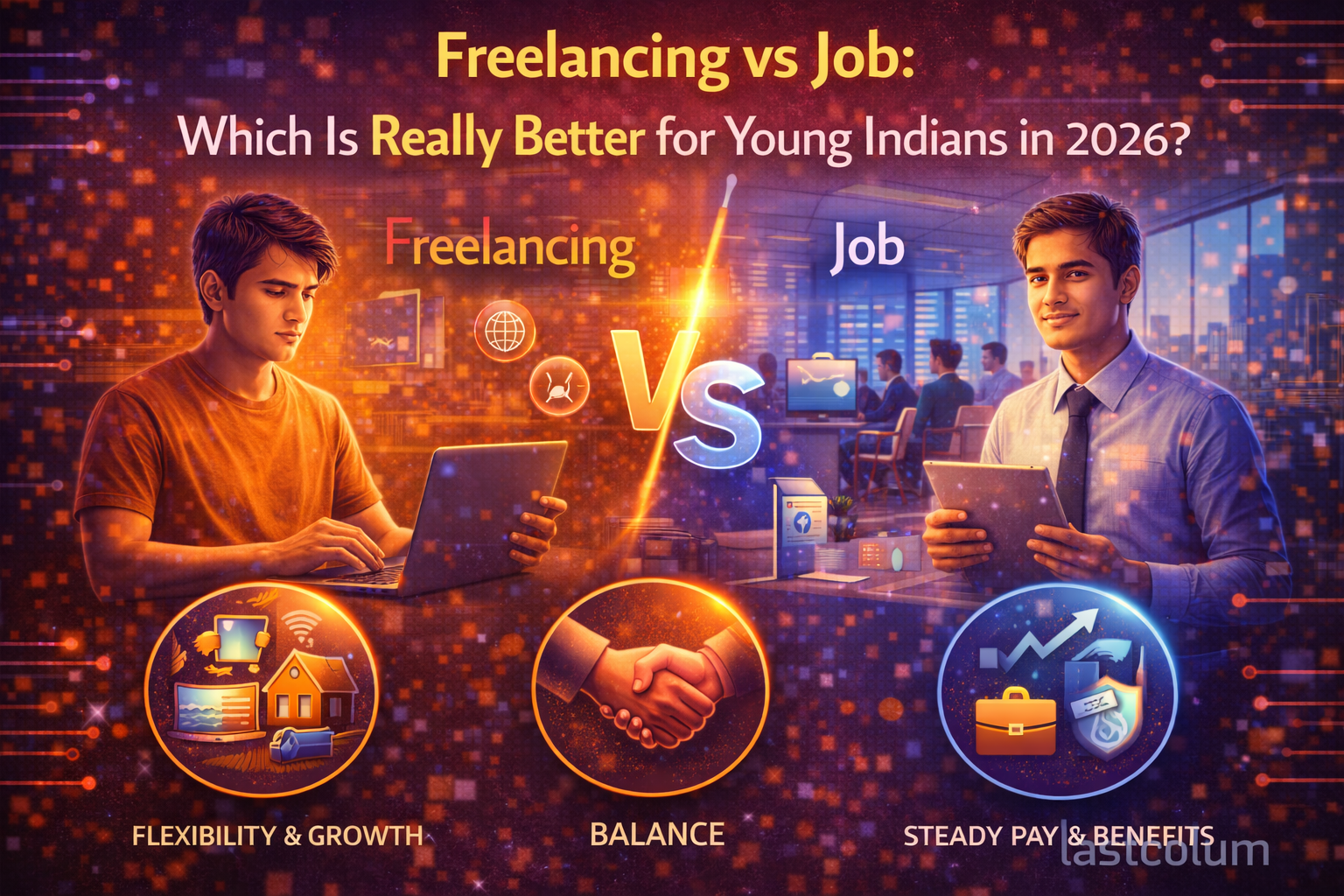
You finished college. Now everyone has an opinion. Your parents want you in a company with a salary slip. Your college friend is billing clients in dollars from a rented room in Pune. Both paths look real. So which one actually works?
The freelancing vs job debate for young Indians in 2026 is not simple. However, it is also not as complicated as people make it. Here is a direct look at both sides.
The Case for a Job
A regular job gives you a fixed income from day one. For most young Indians, this matters more than people admit out loud. Rent, EMIs, and family expectations do not pause for slow months.
Beyond the paycheck, a job gives you structure. You work alongside experienced people. You learn how teams function. Moreover, you build a professional network, often faster than you would working alone.
Many companies now offer competitive starting packages. IT, finance, and product-based firms in Bengaluru, Hyderabad, and Pune pay decent salaries to fresh graduates. In addition to salary, provident fund, health insurance, and paid leave add real value that freelancers must fund themselves.
The trade-off is time. You give 9 to 10 hours a day to someone else’s goals. Promotions can take years. Furthermore, if the company struggles, your job goes with it. Income security is not the same as job security.
The Case for Freelancing
Freelancing in India has changed significantly. In 2026, platforms like Toptal, Contra, and LinkedIn make it easier to find international clients. As a result, a mid-level developer, designer, or content writer can earn in dollars while living in a city where costs stay relatively low. That gap is real and it adds up.
You also control your schedule. That is a practical benefit, not just a lifestyle claim. If you work better at night, you can. If you want three weeks off, you plan for it. Nobody approves your leave.
But freelancing means you are the business. You handle taxes, invoicing, client follow-ups, dry months, and the pressure that comes with no guaranteed income. The first six months can be genuinely hard. Many freelancers undercharge early on and burn out before they find their footing.
What Actually Drives the Decision
Income ceiling: Freelancers who build a strong portfolio can out-earn salaried peers within three to four years. Nevertheless, that ceiling takes effort to reach. A job gives you a floor. Freelancing gives you neither a floor nor a ceiling by default.
Skill building: Jobs work better for structured learning early in a career. You get feedback, mentors, and clear processes. Freelancers learn by doing, which is faster in some ways and rougher in others.
Risk tolerance: If you have financial dependents, a job is the safer starting point. However, if you have savings, a low-cost lifestyle, and a marketable skill, freelancing is worth trying sooner rather than later.
Social security: This is a real and often ignored gap in freelancing. No EPF, no gratuity, no employer-paid insurance. Freelancers must build these separately. Most do not start until it is too late.
One Honest Take
Neither path is obviously better. A job is not selling out. Freelancing is not the right fit for everyone who dislikes offices. The real question is what you need right now.
Some people do both. They hold a job, take small freelance projects on the side, build a client base, and then switch. That path is slower. But it is far less risky, and it works.
Frequently Asked Questions(FAQs)
1. Can a fresher start freelancing in India without a job first?
Yes, but consistent earnings take longer to arrive. Freshers often struggle without a portfolio or professional references. Taking a job for one to two years first helps you build credibility before going independent.
2. Which pays more in India, freelancing or a salaried job?
Experienced freelancers working with international clients often earn more than salaried employees at the same experience level. However, income varies widely based on skill, niche, and how actively you find clients. Salaried jobs offer predictability that freelancing does not match early on.
3. Is freelancing stable enough to support a family in India in 2026?
It can be, but it requires planning ahead. Freelancers need to save during high-income periods, buy their own health insurance, and keep an emergency fund covering three to six months of expenses. Stability comes with time and strong client relationships, not immediately.
Other Articles
How Do JavaScript Closures, Promises & Async/Await Work?
How Is Social Media Affecting Teenagers’ Mental Health?