
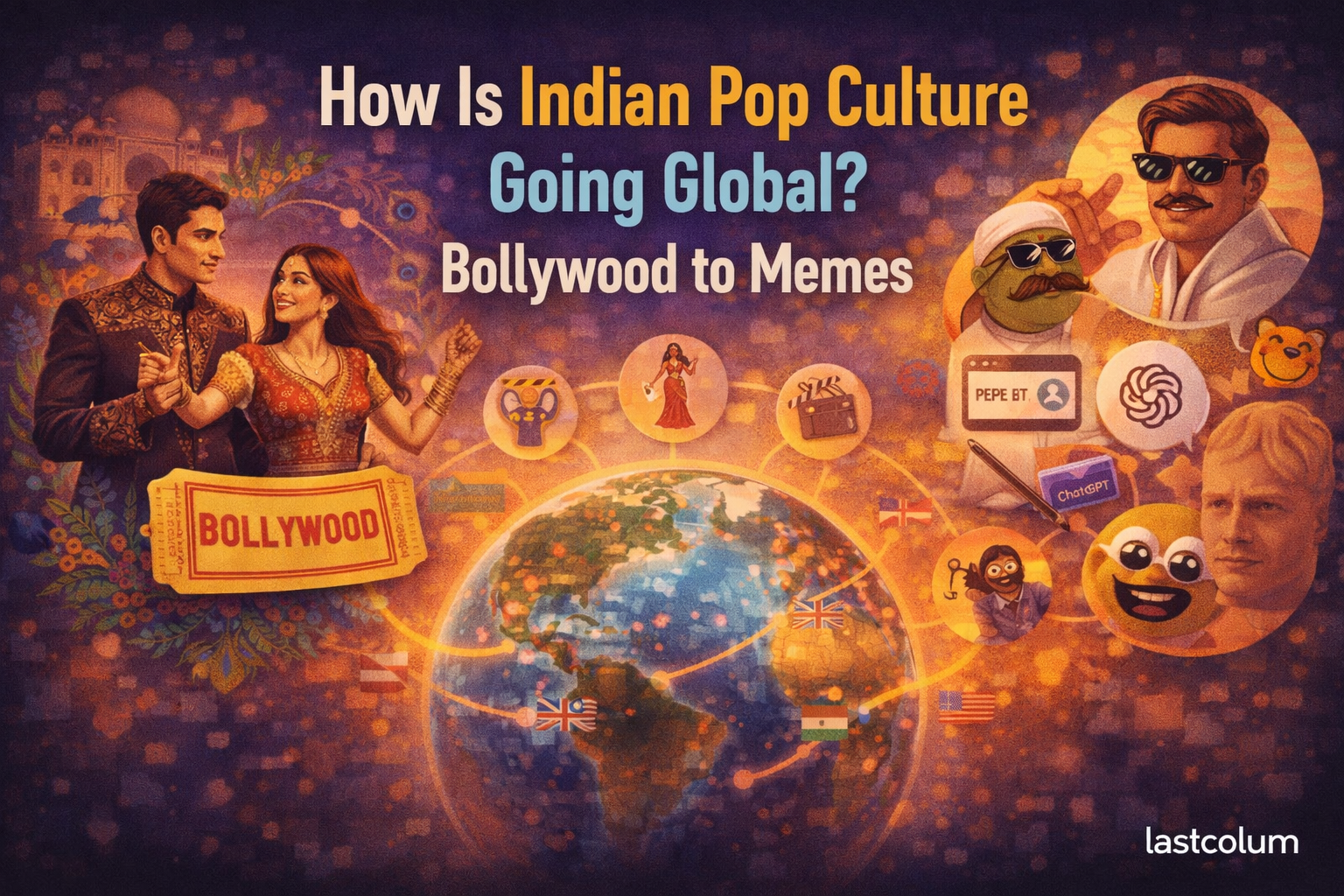
Ten years ago, Bollywood was something Indians watched at home or in diaspora theatres abroad. Today, RRR plays at the Oscars. Nattu Nattu wins Best Original Song. A remix of Kesariya trends on TikTok in Brazil. Something shifted, and it shifted fast.
Indian pop culture going global is not a PR campaign or a government initiative. It is happening because the content got better, the platforms got bigger, and the world got more curious about cultures outside the English-language mainstream.
Here is what is actually driving it.
Bollywood Stopped Waiting for Permission
For decades, Indian films chased Western validation without getting much of it. That changed when directors stopped trying to imitate Hollywood and leaned into what Indian cinema does best: scale, spectacle, emotion, and music that you cannot get out of your head.
RRR is the clearest example. It did not try to be a Marvel film. It was a Telugu action epic with two-hour dance numbers and mythological undertones. That specificity is what made it land internationally. Streaming platforms put it in front of audiences who had never seen anything like it. They watched. Then they rewatched.
South Indian cinema, in particular, has found a global audience faster than anyone expected. Films like KGF and Kantara travel well because they are rooted in a specific place and culture. Paradoxically, that rootedness makes them more interesting to outsiders, not less.
Music Found Its Own Lane
Bollywood songs have been sampled and remixed by Western artists for years. However, something different is happening now. Indian music is crossing over on its own terms.
Diljit Dosanjh sold out arenas in North America in 2024. AP Dhillon built a fanbase in Canada before most Indian music labels noticed him. These artists did not water down their sound for Western ears. They made Punjabi music produced well enough to compete on global streaming charts, and audiences followed.
The pattern holds. When Indian music tries to sound Western, it rarely breaks through. When it sounds confidently Indian, it finds an audience that did not know it was looking for something like this.
Memes Are Doing More Than People Realize
This part gets underestimated. Indian meme culture has become one of the most recognizable on the internet, and it travels in ways traditional media cannot.
The Kuch Kuch Hota Hai meme format spread across languages. Bollywood hero edits went viral across Southeast Asia and West Africa. Randall Park’s clip expressing disbelief and delight about RRR became a reference point for how non-Indian audiences were discovering Indian film.
Memes compress culture into a shareable moment. When a scene from a 1998 Shah Rukh Khan film becomes a reaction format used in Turkey or the Philippines, that is cultural reach no marketing budget can replicate.
Moreover, Gen Z globally has a higher tolerance for non-English content. They grew up watching anime, K-drama, and Spanish telenovelas on the same platform they use for everything else. Indian content fits naturally into that media diet.
What This Actually Means
Indian pop culture going global does not mean it will replace Hollywood or K-pop. It means it has joined a genuinely multipolar media landscape where audiences pick what they want from everywhere.
The interesting question is whether the industry can sustain this. Quality is the only thing that travels. The films and songs that broke through did so because they were genuinely good, not because they were Indian. That bar does not lower just because international attention arrived.
The creators who understand this are already working on what comes next.
Frequently Asked Questions
1. Why is Indian pop culture becoming popular globally?
Several factors converged at once. Streaming platforms gave Indian content international distribution. South Indian and Punjabi artists leaned into their own styles instead of chasing Western sounds. Global audiences, especially Gen Z, also became more open to non-English content after years of K-pop and anime.
2. Which Indian films have performed best internationally?
RRR, KGF Chapter 2, and Kantara drew significant international audiences after appearing on global streaming platforms. RRR won an Academy Award for Best Original Song in 2023, which brought wider attention to South Indian cinema specifically.
3. Is Bollywood the same as Indian cinema?
No. Bollywood refers specifically to Hindi-language films made in Mumbai. Indian cinema also includes Tamil, Telugu, Malayalam, Kannada, Punjabi, and Bengali film industries, each with their own distinct styles and audiences. Much of the recent global breakout success has come from South Indian cinema, not Bollywood.
Other Articles

How to Switch Careers in Your 30s Without Starting Over?