
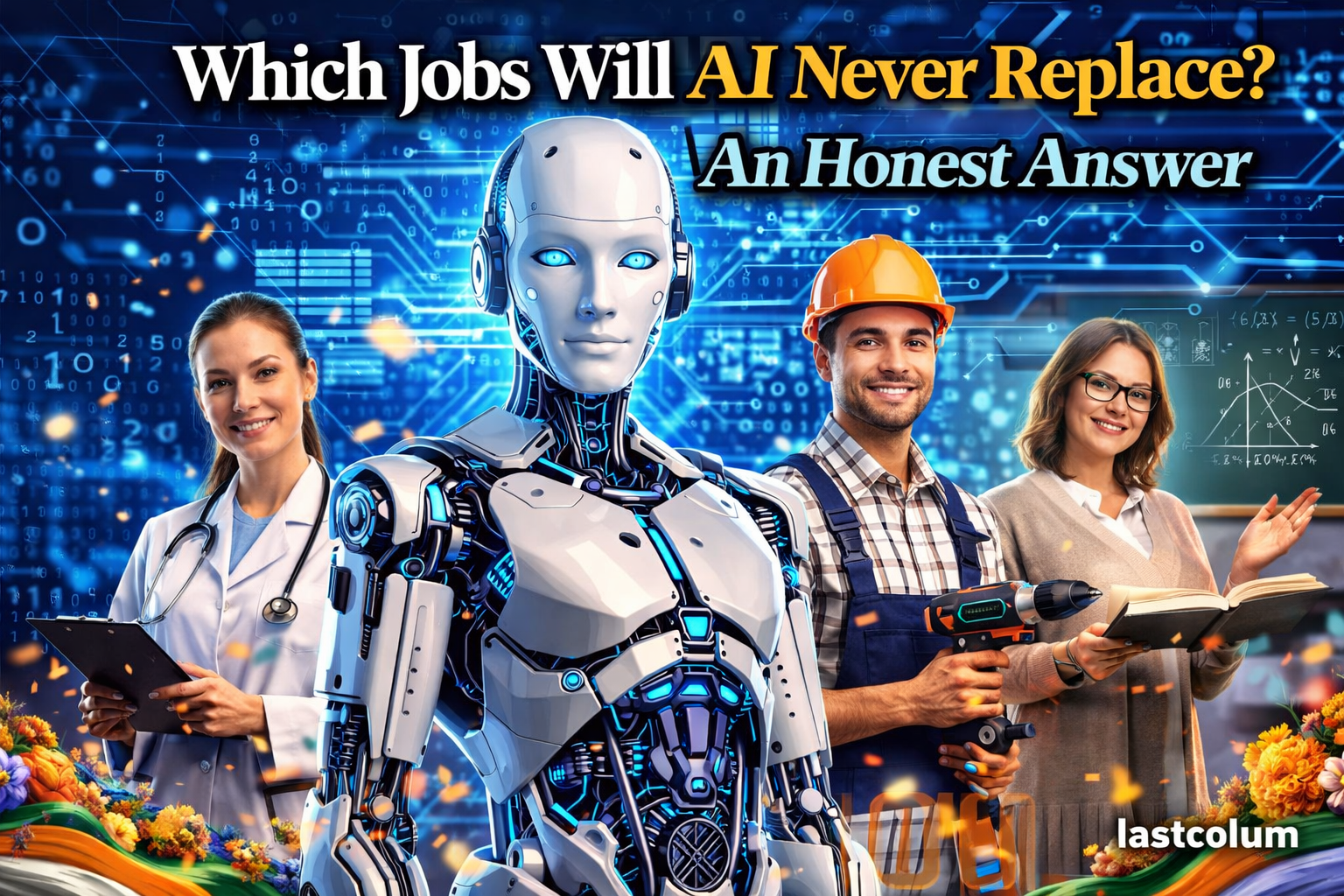
The honest answer starts with a correction. The question is not which jobs AI will never replace. It is which jobs AI cannot fully replace because they depend on things current AI genuinely cannot do well.
That distinction matters. AI already does parts of many jobs. It writes first drafts, analyzes data, and generates code. The question of jobs AI will never replace is really a question about what remains after AI handles everything it can.
Jobs That Require Physical Presence in Unpredictable Environments
Robots and AI struggle with environments that change constantly in ways that cannot be scripted.
Plumbers, electricians, and HVAC technicians work inside walls and ceilings that differ from one building to the next. No two jobs are identical. The problem-solving happens in real space, where each situation demands improvisation. A leaking pipe behind a specific wall requires reading the physical context on the spot. AI cannot smell a gas leak. It cannot squeeze into a space and figure out what is wrong by touch and sight.
Similarly, surgeons face unexpected complications mid-operation. A skilled surgeon adapts in real time, drawing on physical intuition built over thousands of hours. AI-assisted surgery exists and helps, but a human remains in control when things go sideways.
Jobs That Require Human Trust at Their Core
Some roles exist specifically because humans need to trust another human.
Mental health therapists work because the relationship itself is therapeutic. A person disclosing trauma operates within a human social contract. Research on therapeutic outcomes consistently links improvement to the quality of the relationship, not just the accuracy of the technique. AI can provide information and suggest strategies. It cannot provide the experience of being genuinely heard by someone who cares.
Furthermore, lawyers in high-stakes situations require human judgment applied to complex ethical terrain. AI can draft contracts and search case law quickly. However, a client going through a divorce or a criminal trial needs a human being who takes responsibility for the advice and will be held professionally accountable.
Jobs That Create Culture and Meaning
AI can generate music, art, and writing. It already does, at scale. However, human culture is made by and for humans who want to know who created something and why.
A novelist writes from lived experience of loss, love, and observation of specific people in specific places. Readers respond to that specificity. They read Arundhati Roy differently than they read an AI that has processed every novel ever written, because the meaning of her work is inseparable from her particular life and perspective.
Musicians, comedians, and filmmakers create work that people consume partly to connect with another human consciousness. That demand does not disappear because AI can produce technically competent content. Moreover, it may intensify as AI-generated content floods the market and human-made work becomes distinctly valuable for being made by a person.
Jobs That Require Ethical Accountability
Judges, politicians, and senior executives make decisions where someone must be held responsible. AI can assist with analysis. However, democratic and legal systems require that a named human takes responsibility for consequential choices.
A judge cannot sentence someone based on an AI recommendation without human accountability for that sentence. A CEO cannot disclaim responsibility for a decision by pointing to an algorithm.
Additionally, care roles including childcare workers, elder care providers, and teachers of young children require human presence for reasons beyond task completion. Children and elderly people need human connection, not just instruction or assistance. The human element is the product.
Frequently Asked Questions(FAQs)
1. Will AI replace most jobs in the next 10 years?
AI will change most jobs significantly rather than eliminate them entirely. Roles involving routine, repetitive, or purely information-based tasks are most affected. Jobs requiring physical adaptability, human trust, ethical accountability, and genuine creative authorship are more resistant. The realistic outcome for most workers is a changing job rather than no job.
2. What skills make workers most resistant to AI replacement?
Physical dexterity in unpredictable environments, the ability to build genuine human trust, ethical judgment with personal accountability, and creative work tied to specific lived experience are the most AI-resistant skill areas. None of these are completely safe from AI assistance, but they are far harder to fully automate than knowledge work alone.
3. Are creative jobs safe from AI?
Partially. AI can produce creative content, but human-authored work retains value when audiences care about who made it. Entry-level creative roles producing generic content at volume face the highest risk. Jobs where the creator’s specific identity and lived experience are part of the product are more likely to survive.
Other Articles