
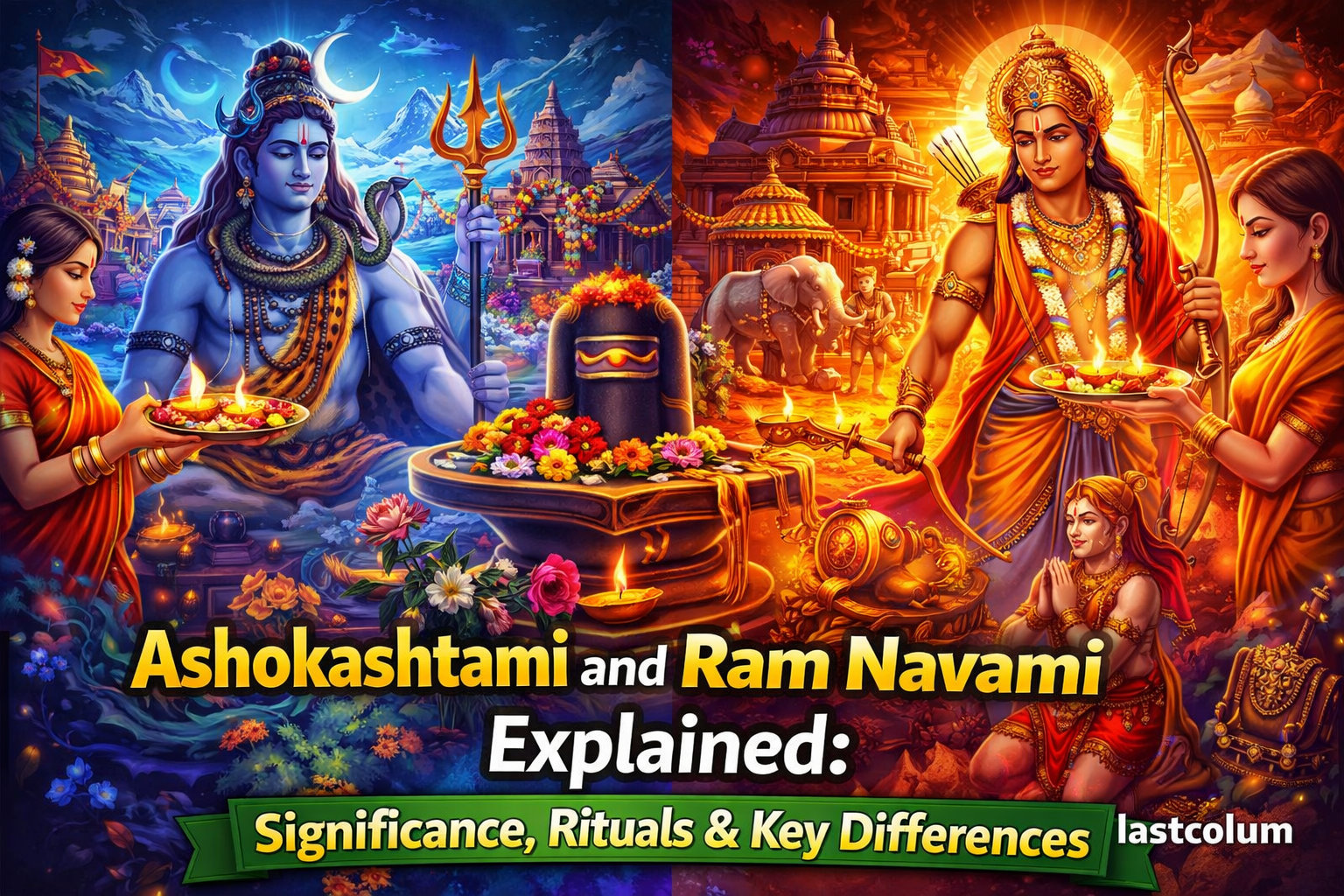
In 2026, Ashokashtami and Ram Navami fall within a day of each other during the auspicious period of Chaitra Navratri. Both festivals mark the eighth and ninth tithis of Shukla Paksha in the month of Chaitra. However, they honor different deities, carry distinct regional traditions, and hold separate meanings for the communities that observe them.
Understanding the Ashokashtami and Ram Navami significance helps you see why these two days, arriving so close together, feel so different in practice.
What Is Ashokashtami?
Ashokashtami falls on Chaitra Shukla Ashtami, the eighth day of the bright fortnight in Chaitra. In 2026, this falls on March 26.
The festival holds special significance in Odisha. At the Jagannath Temple in Puri, Ashokashtami marks the beginning of the Chandana Yatra, a 42-day festival during which Lord Jagannath is anointed with sandalwood paste. The deity’s representative idol, the Madanmohan, is taken out in a ceremonial chariot procession through Puri. This is one of the rare occasions in the year when Lord Jagannath moves outside the temple walls.
For Odia devotees, this day carries enormous local significance. The procession draws large crowds to Puri. Devotees fast, offer prayers, and seek blessings connected specifically to the Jagannath tradition.
Beyond Odisha, Chaitra Shukla Ashtami is observed as Durga Ashtami across much of northern and eastern India. On this day, Maa Mahagauri is worshipped and Kanya Pujan takes place in the morning. In 2026, the Sandhi Puja falls between 11:24 AM and 12:12 PM on March 26, at the precise transition between the Ashtami and Navami tithis.
What Is Ram Navami?
Ram Navami falls on Chaitra Shukla Navami, the ninth day of the same fortnight. In 2026, the Navami Tithi begins at 11:48 AM on March 26 and continues until 10:06 AM on March 27. Most observances take place on March 27, following the Udaya Tithi rule where the tithi present at sunrise determines the day.
Ram Navami marks the birth of Lord Rama, the seventh avatar of Lord Vishnu, to King Dasharatha and Queen Kaushalya in Ayodhya. The most sacred window for puja is the Madhyahna Muhurat. In 2026, this runs from 11:13 AM to 1:41 PM, with the birth moment at 12:27 PM.
Celebrations include temple visits, Ramayana recitations, bhajan sessions, havans, and Shobha Yatras. Ayodhya witnesses large gatherings, with devotees taking a holy dip in the Sarayu river before entering the Ram temple.
Furthermore, Ram Navami carries a wider moral message. It is not only a birthday commemoration. It is a reminder of the values attributed to Lord Rama: duty, truth, compassion, and justice. Many devotees observe a full-day fast and break it only after completing evening prayers.
Key Differences Between the Two Festivals
Both festivals fall in Chaitra and observe the same lunar fortnight, but they diverge in almost every other way.
Ashokashtami is primarily observed in Odisha and belongs to the Jagannath tradition. Ram Navami is observed across all regions of India and belongs to the Vaishnav tradition of Vishnu worship through the avatar of Rama.
Moreover, the deity honored differs. Ashokashtami focuses on Lord Jagannath, with Durga worship layered in for other regions observing Ashtami. Ram Navami focuses specifically on Lord Rama’s birth.
In 2026, the proximity of the two festivals creates a rare spiritual alignment. Ashtami and Navami tithis coincide on March 26, combining the blessings of Durga’s strength and Rama’s dharma into a single day. This overlap happens only every few years due to the movement of lunar tithis.
Frequently Asked Questions
1. When is Ashokashtami in 2026?
Ashokashtami falls on March 26, 2026, on Chaitra Shukla Ashtami. In Puri, Odisha, this day marks the beginning of the Chandana Yatra at the Jagannath Temple, when the Madanmohan idol is taken out in a ceremonial chariot procession.
2. When is Ram Navami in 2026 and what is the puja muhurat?
Ram Navami 2026 is widely observed on March 27 in Ayodhya and across India, following the Udaya Tithi rule. The auspicious puja muhurat runs from 11:13 AM to 1:41 PM, with the Madhyahna Moment at 12:27 PM considered the birth moment of Lord Ram.
3. What is the difference between Ashokashtami and Ram Navami?
Ashokashtami is an Odia festival centered on Lord Jagannath, marking the start of the Chandana Yatra in Puri. Ram Navami is a pan-India festival marking the birth of Lord Rama. Both fall in Chaitra Navratri, one day apart, but they honor different deities, observe different rituals, and carry distinct regional traditions.
Other Articles
What Is Everyone Searching on Google in 2026 and Why?