
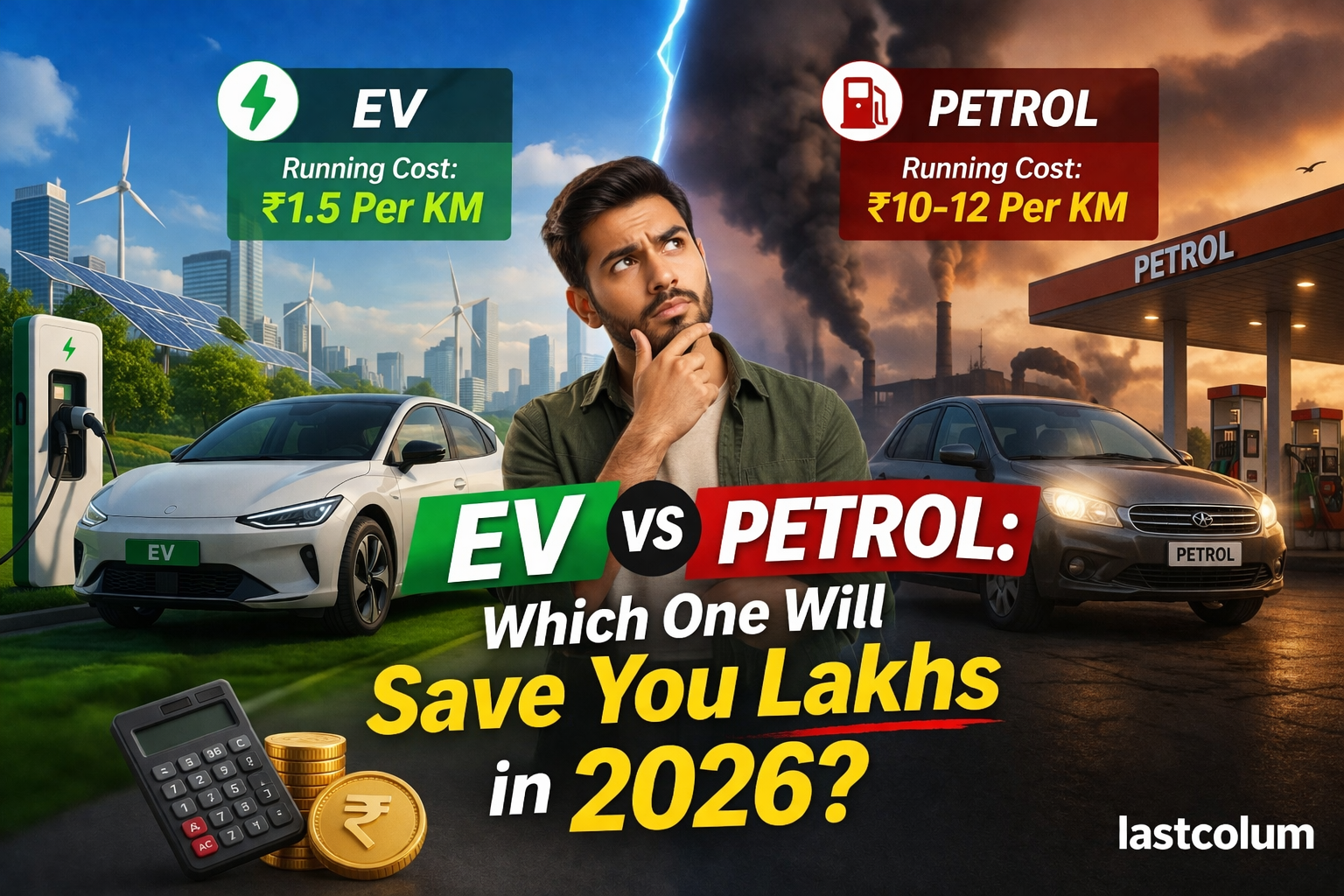
The EV vs petrol cost India 2026 debate has a clear answer for most city commuters and it is not the one petrol buyers want to hear. With petrol prices holding near Rs 100 per liter across major Indian cities, running an electric car now costs between Rs 0.80 and Rs 1.50 per kilometer. A comparable petrol car costs Rs 5.50 to Rs 6 per kilometer. That gap is real, and over five years it adds up to serious money.
But the full picture is more complicated than fuel savings alone. Let us break it down by what you actually pay across the ownership cycle.
The Running Cost Gap Is Huge
Take the Tata Nexon as the most direct comparison. The petrol version at 14 km per litre, with petrol at Rs 100, costs roughly Rs 7 per kilometre in city driving. The Nexon EV, charged at home at Rs 8 per kWh, costs around Rs 1.20 per kilometre.
At 1,200 km per month, that difference works out to approximately Rs 7,000 in monthly savings. Over a year, that is close to Rs 91,000 saved on fuel alone, according to an April 2026 cost breakdown by AutoPunditz.
Over five years at 10,000 km annually, a petrol car costs between Rs 2.9 lakh and Rs 5 lakh just in fuel. An EV over the same period costs Rs 50,000 to Rs 1 lakh in electricity. The gap runs to Rs 2.4 lakh or more.
Maintenance Tells a Similar Story
EVs have fewer moving parts. There is no engine oil to change, no clutch to replace, and no exhaust system to maintain. Annual maintenance for a petrol car in India runs between Rs 8,000 and Rs 12,000. For an EV, that figure drops by 30 to 40 percent.
Over five years, that difference adds up to Rs 50,000 or more in saved servicing costs. So when you combine fuel savings and maintenance savings, an EV can save Rs 1.5 to Rs 3 lakh over five years depending on how much you drive.
The one concern that matters here is the battery. Replacement costs between Rs 4 lakh and Rs 8 lakh, and that is a real number. However, most manufacturers now offer an eight-year battery warranty. Tata, MG, and Hyundai all cover batteries for eight years or 1.6 lakh kilometres. If you keep the car within that window, this risk stays manageable.
The Upfront Cost Problem Is Shrinking
This is where petrol still wins for now. An EV typically costs Rs 2 to Rs 5 lakh more upfront than its petrol equivalent. The Nexon EV, for example, carries a premium of roughly Rs 4 lakh over the petrol Nexon before subsidies.
But two things reduce that gap significantly. First, the FAME-II scheme provides subsidies up to Rs 1.5 lakh for eligible electric cars. Second, several states stack additional incentives on top. Delhi adds another Rs 1.5 lakh and waives road tax. Maharashtra offers up to Rs 2.5 lakh in total. Tamil Nadu, Karnataka, and Telangana each reduce registration fees for EV buyers.
After subsidies, the real upfront premium in many cases drops to Rs 1.5 to Rs 2.5 lakh. At Rs 91,000 saved per year in fuel alone, that premium pays itself back in around two years for someone driving 1,200 km per month.
When Petrol Still Makes Sense
Not every driver benefits from an EV in 2026. If you drive fewer than 800 km per month, the running cost savings do not recover the upfront premium fast enough. If you live in a city without reliable charging infrastructure, or in an apartment without a dedicated parking spot, home charging becomes a logistical problem.
Long highway trips are another weak point. Fast-charging networks on Indian highways are still developing. A petrol car remains the more practical choice for regular inter-state travel, where refuelling takes two minutes and stations are everywhere.
For those cases, petrol makes sense today. For everyone else especially city commuters driving more than 1,000 km per month the numbers in 2026 clearly favor the EV.
The Five Year Verdict
If you drive 15,000 km a year and have home charging access, an EV saves you Rs 2.4 lakh in fuel and another Rs 40,000 to Rs 50,000 in maintenance over five years. Add state subsidies, and the total financial advantage over a comparable petrol car often crosses Rs 3 lakh.
That is not a projection. That is what the cost data for 2026 actually shows.
Frequently Asked Questions
- How much does an EV save compared to a petrol car in India in 2026?
At 1,200 km per month, an EV saves approximately Rs 91,000 per year in fuel costs alone. Over five years at standard usage, total savings on fuel and maintenance combined reach Rs 1.5 to Rs 3 lakh, depending on driving distance and the state subsidies you access.
2. What is the per-kilometer cost of running an EV vs a petrol car in India?
In 2026, a petrol car costs between Rs 5.50 and Rs 6 per kilometre based on current fuel prices. An EV charged at home costs between Rs 0.80 and Rs 1.50 per kilometre. Using public fast chargers raises that to around Rs 1.50, which is still four times cheaper than petrol.
3. When does buying an EV make financial sense over a petrol car?
An EV makes financial sense if you drive more than 1,000 to 1,200 km per month, have access to home charging, and plan to own the car for at least four to five years. At that usage level, the upfront premium pays back within two to three years through fuel and maintenance savings.
Other Articles
What Iran Can Teach the World That No One Talks About