Claude Enterprise Plugins : Enterprise AI changed direction in 2026. Instead of generic chatbots, companies now demand systems that work inside real workflows. Consequently, AI adoption shifted from experimentation to execution.
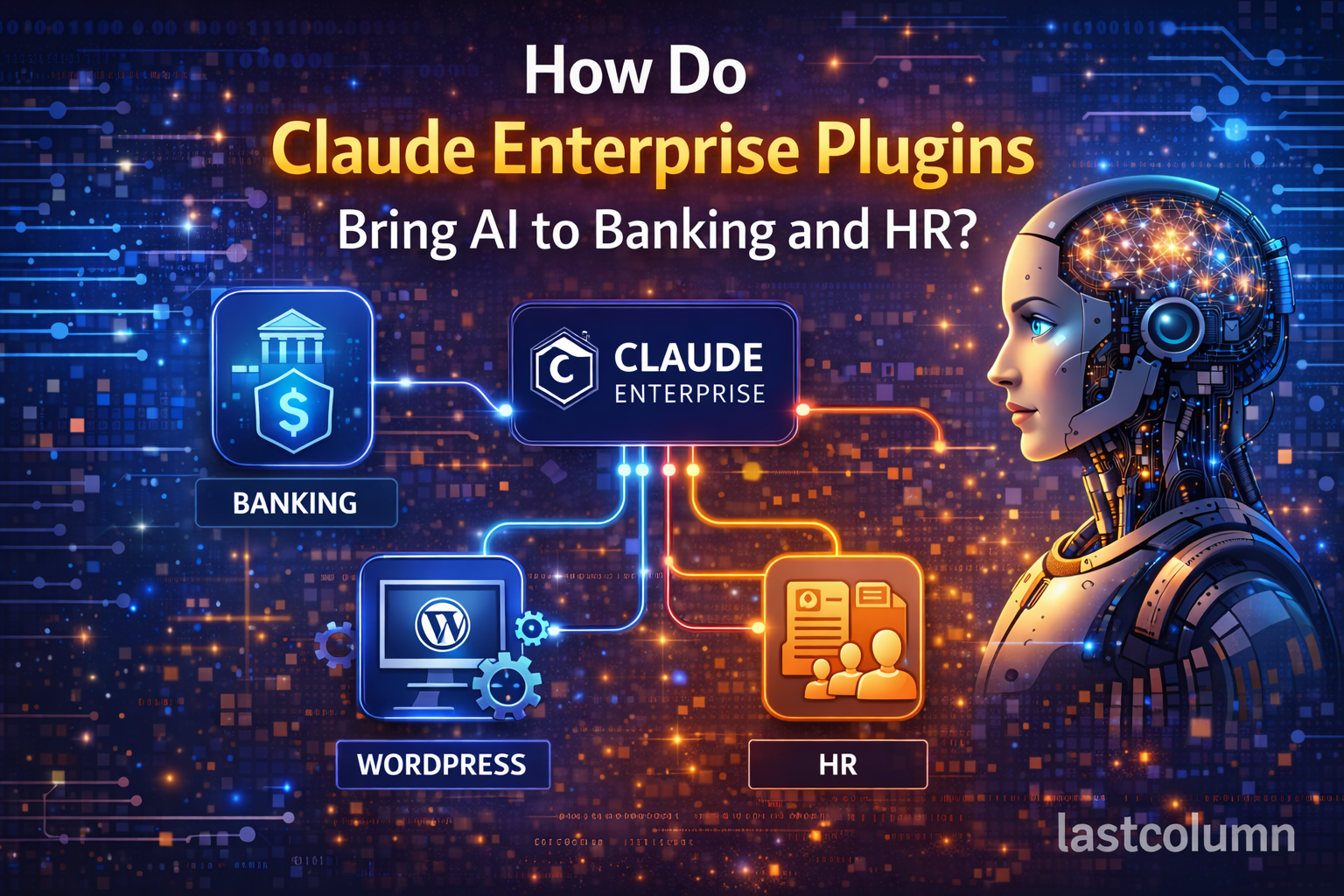
This article explains Claude Enterprise Plugins Explained in simple terms. It covers how Anthropic moved Claude into banking and HR operations. Additionally, it explores why this shift impacts traditional enterprise software markets.
What Are Claude Enterprise Plugins?
Claude Enterprise Plugins are specialized tools embedded into business workflows. They allow Claude to act as an AI agent instead of a simple assistant. Consequently, tasks move from chat responses to real actions.
On February 24, 2026, Anthropic expanded its Claude Cowork platform. The update introduced ten enterprise plugins designed for department specific use. This release transformed Claude into a functional work partner.
Unlike consumer AI, these plugins operate with institutional data, permissions, and controls. Therefore, enterprises can use AI safely at scale.
Claude Enterprise Plugins Explained: Why This Matters in 2026
This release represents a structural change in enterprise software. AI no longer sits outside tools. Instead, it connects directly to them.
Claude now performs multi step tasks across applications. Consequently, productivity improves without constant human switching between tools. This design aligns with how real teams work.
The shift also explains market reaction. Traditional SaaS providers face disruption as AI agents handle tasks previously done by multiple tools.
Banking and Finance Use Cases
Finance became the first major beneficiary. Anthropic partnered with leading data providers to ensure accuracy and trust.
Claude integrates with London Stock Exchange Group, FactSet, and S&P Global. Consequently, Claude accesses institutional grade data rather than public summaries.
Key finance capabilities include:
- Reviewing transaction documents and drafting pitch decks
- Parsing earnings transcripts and updating financial models
- Automating due diligence for private equity teams
In head to head testing by Wall Street Prep, Claude 4.6 ranked as a top tier tool for building three statement models. It nearly matched junior analysts in speed and sourcing accuracy.
Wealth Management and Investment Research
Wealth managers use Claude to analyze portfolio drift and tax exposure. Additionally, it generates rebalancing recommendations tailored to client goals.
Equity research teams rely on Claude to extract insights from earnings calls. Consequently, analysts focus more on judgment rather than data cleanup.
Private equity firms benefit from automated document analysis. Claude scores opportunities against investment criteria quickly. Therefore, deal evaluation cycles shorten significantly.
Human Resources and the Employee Lifecycle
HR plugins focus on consistency and efficiency. They support the full employee lifecycle from hiring to evaluation.
Core HR use cases include:
- Drafting job descriptions and offer letters
- Creating role specific onboarding plans
- Writing performance reviews from structured inputs
Compensation analysis also improves. Claude benchmarks roles against industry standards. Consequently, HR teams make fair and competitive decisions faster.
Brand tone remains consistent across internal communications. This consistency matters as organizations scale.
Technical Architecture and Ecosystem
Claude Enterprise Plugins rely on deeper system integration. This is not a chat update. It is a platform shift.
Admins manage tools through a centralized Customize Dashboard. Skills and connectors operate via the Model Context Protocol. Consequently, governance stays centralized.
Large organizations can create private plugin marketplaces. Custom plugins remain inside company systems. Therefore, proprietary data never leaves internal boundaries.
Claude also supports cross app orchestration. For example, it pulls data from spreadsheets and generates presentations automatically. This capability reduces manual reporting work.
Key Enterprise Integrations
Claude connects deeply with existing enterprise tools. Major integrations include Google Workspace, Slack, DocuSign, and LegalZoom. Consequently, teams do not need to change software habits.
These integrations allow Claude to act across departments. Finance, HR, and legal teams share a common AI layer. This design reduces silos.
Market Impact and Industry Response
The launch caused concern in enterprise software markets. Investors worry that AI agents may reduce reliance on traditional SaaS tools. Consequently, stocks tied to CRM and accounting software saw pressure.
Anthropic’s Head of Product Scott White clarified the intent. The goal is better outcomes, not replacing workers. AI supports professionals rather than removing them.
This positioning emphasizes augmentation over automation.
Challenges Enterprises Must Manage
Despite promise, challenges remain. Data governance, access control, and change management require planning. Additionally, teams must trust AI outputs gradually.
Training employees to collaborate with AI becomes essential. Consequently, adoption success depends on culture as much as technology.
Claude’s enterprise plugins redefine how AI fits into work. They move AI from conversation into execution.
Understanding Claude Enterprise Plugins Explained reveals why banking and HR lead adoption in 2026. Institutional data access, agentic workflows, and secure integration set a new standard. Consequently, Anthropic positions Claude as a core enterprise platform rather than just an assistant.
Frequently Asked Questions(FAQs)
1. Are Claude Enterprise Plugins available to all companies?
They target mid to large enterprises, especially regulated industries like finance and HR.
2. Does Claude replace analysts or HR professionals?
No. Claude accelerates tasks while humans retain judgment and accountability.
3. Why did enterprise software stocks react negatively?
Investors fear AI agents may reduce dependence on traditional SaaS tools over time.
WordPress vs Next.js: Which CMS Is Better for Your Website in 2026?