
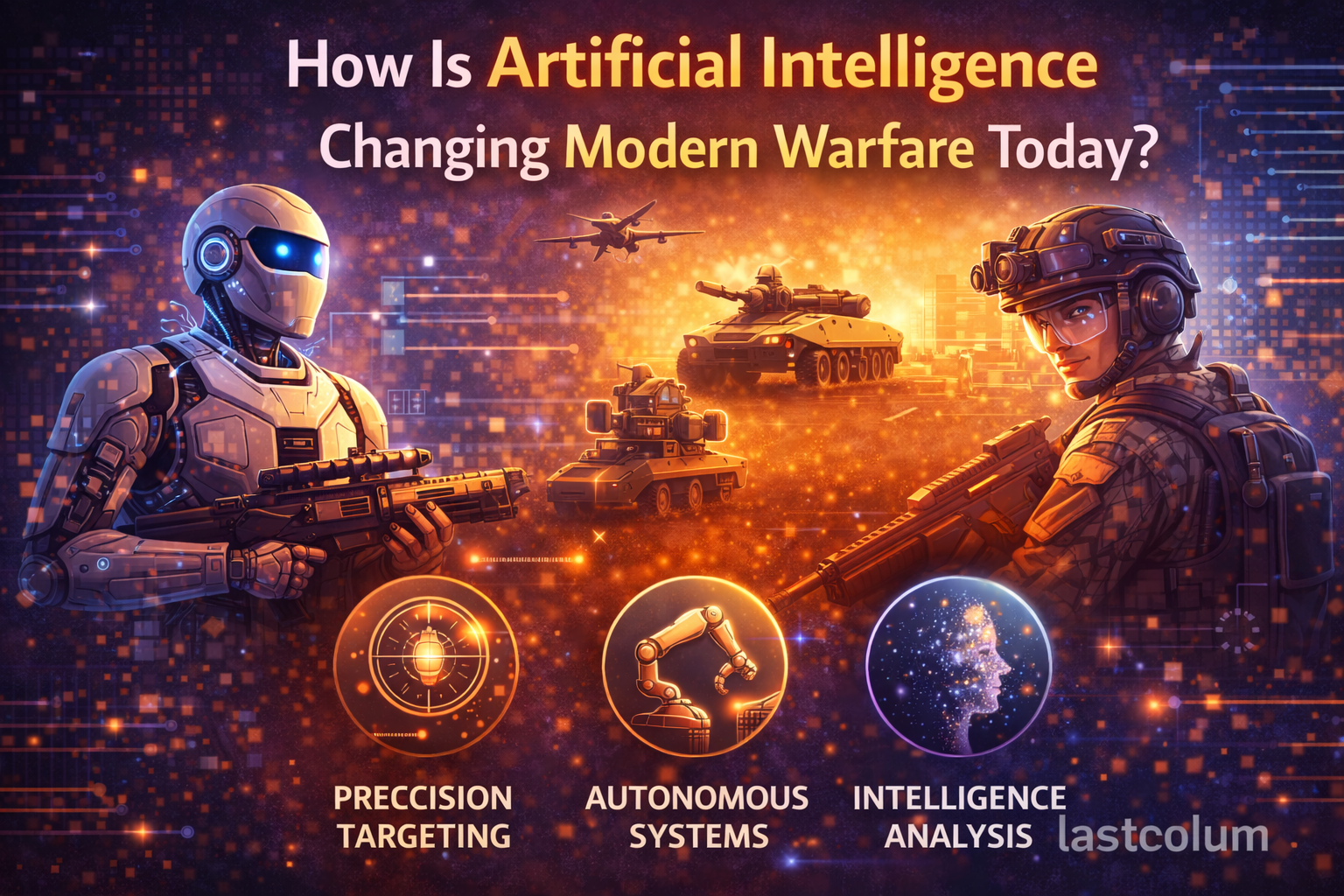
Technology has always shaped the battlefield. From gunpowder to satellites, every innovation transformed military strategy. Today, the next major shift comes from artificial intelligence. Governments and defense organizations now invest heavily in AI driven systems. Consequently, warfare is becoming faster, more automated, and data focused.
Understanding artificial intelligence changing modern warfare helps explain how future conflicts may unfold. Additionally, AI affects decision making, surveillance, and cyber operations. Therefore, the role of human soldiers is also evolving.
The Evolution of Technology in Warfare
Military innovation has historically followed technological progress. Radar systems changed air defense during World War II. Additionally, precision missiles reshaped combat strategy in the late twentieth century.
However, artificial intelligence introduces a different type of transformation. Instead of improving single weapons, AI improves entire decision systems. Consequently, commanders receive faster analysis and predictions.
Moreover, AI processes massive amounts of battlefield data quickly. This ability provides strategic advantages in complex situations.
Artificial Intelligence Changing Modern Warfare Strategies
The influence of artificial intelligence changing modern warfare appears most clearly in strategic planning. AI powered systems analyze satellite images, battlefield reports, and intelligence data simultaneously.
Additionally, predictive algorithms help military planners estimate enemy movements. Consequently, decisions can occur in minutes instead of hours.
Several military functions now depend on AI:
- Automated target recognition from drone footage
- Predictive analysis of enemy logistics
- Real time battlefield decision support
These tools increase efficiency and reduce uncertainty. However, they also introduce ethical concerns about automated decisions.
Autonomous Weapons and Military Drones
One of the most visible AI applications involves autonomous drones. These systems can identify targets and navigate environments without constant human control. Additionally, drones reduce risk for soldiers during reconnaissance missions.
Countries now develop unmanned vehicles for air, sea, and land operations. Consequently, warfare becomes less dependent on traditional troop deployment.
Key advantages of AI powered drones include:
- Faster surveillance across large areas
- Reduced human casualties during reconnaissance
- Lower operational costs compared to manned aircraft
However, autonomous weapons raise serious ethical debates. Critics worry about machines making life and death decisions.
Cyber Warfare and AI Defense Systems
Cyber warfare has become a major battlefield. Governments now attack digital infrastructure rather than physical targets. Consequently, artificial intelligence plays a vital defensive role.
AI systems monitor networks continuously. Additionally, they detect unusual behavior that may signal cyber attacks. This rapid detection allows organizations to respond quickly.
For example, AI based tools can identify malware patterns instantly. Human analysts might require hours to detect the same threat. Therefore, AI improves cybersecurity resilience for military networks.
However, attackers also use AI to develop sophisticated cyber strategies. As a result, cyber warfare continues to evolve rapidly.
Ethical and Political Challenges
Despite its advantages, AI introduces complex ethical questions. Autonomous weapons could operate without direct human oversight. Additionally, algorithm errors may cause unintended damage.
International organizations now debate regulations for AI driven military technology. Some experts argue for strict global agreements. Others believe technological competition makes regulation difficult.
Important concerns include:
- Accountability for AI controlled weapons
- Risk of accidental escalation during conflicts
- Unequal access to advanced military technology
Consequently, policymakers must balance innovation with responsible governance.
The Future of AI Driven Military Operations
Artificial intelligence will likely shape the next generation of warfare. Military research now focuses on human machine collaboration rather than full automation. Additionally, AI may assist soldiers through enhanced decision tools and battlefield simulations.
Future systems could analyze global intelligence data in real time. Consequently, leaders may detect conflicts before they escalate. This predictive capability might strengthen diplomatic strategies.
However, technological superiority may also intensify geopolitical competition. Therefore, global cooperation remains essential to manage emerging risks.
The rise of artificial intelligence changing modern warfare represents one of the most significant military transformations in history. AI improves surveillance, strategy, cyber defense, and autonomous operations. Additionally, it accelerates decision making across complex battlefield environments.
However, technological power also brings ethical responsibilities. Governments must ensure human oversight and accountability in AI driven systems. Consequently, the future of warfare will depend not only on innovation but also on responsible policy and international cooperation.
Frequently Asked Questions(FAQs)
How is artificial intelligence used in modern warfare?
AI supports surveillance, cyber defense, data analysis, and autonomous drones. These tools help military forces make faster strategic decisions.
Are autonomous weapons already used in warfare?
Some semi autonomous systems already exist, especially drones and defense systems. However, fully autonomous weapons remain controversial.
Can artificial intelligence prevent wars?
AI cannot prevent wars directly. However, predictive analysis and intelligence tools may help leaders detect conflicts earlier and respond diplomatically.
Other Articles

Why Do Some People Feel Insecure About Their Religion?