
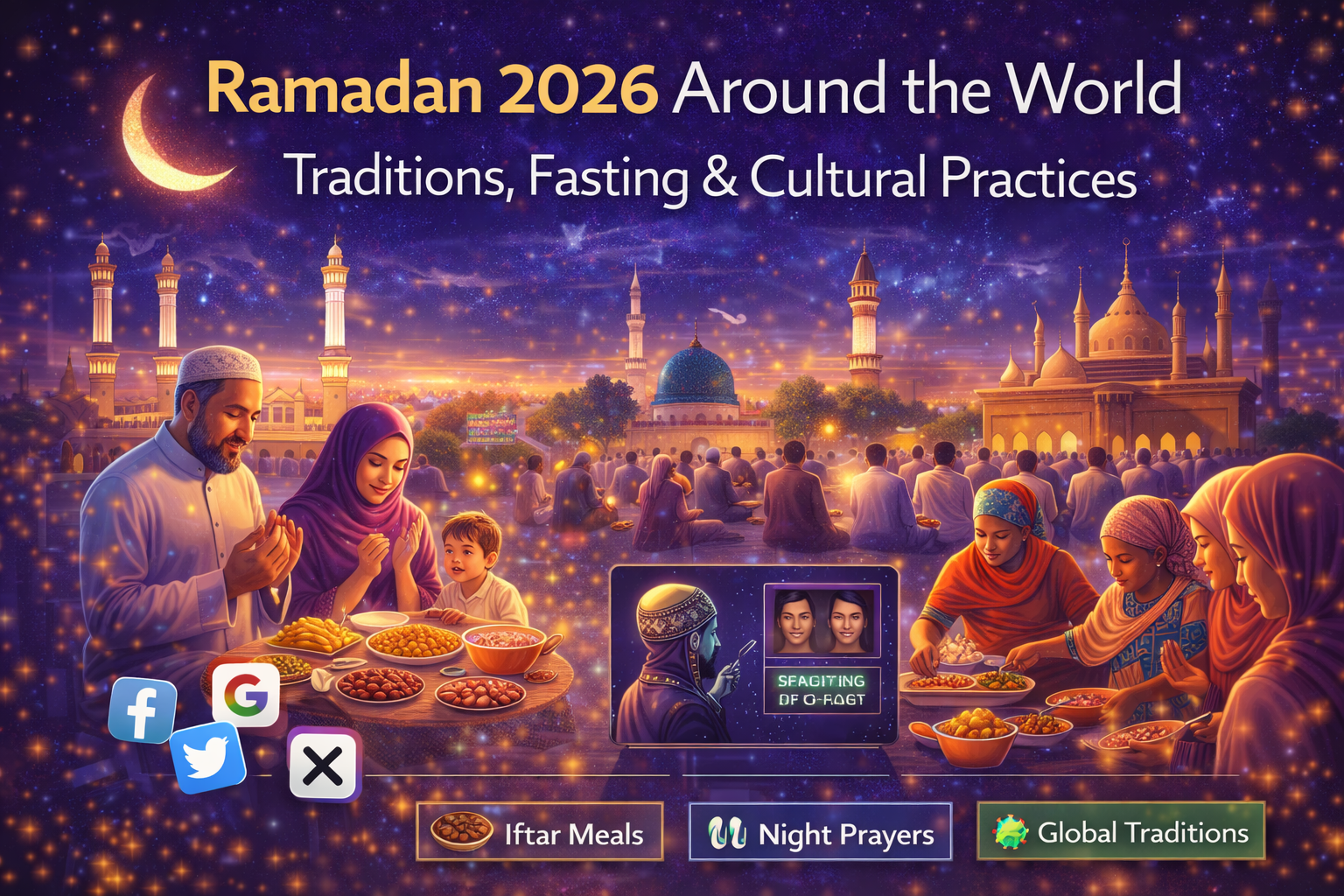
Ramadan is one of the most sacred months in Islam. Millions of Muslims observe it every year through fasting, prayer, and charity. However, traditions and daily practices vary across regions. Consequently, Ramadan 2026 feels both universal and deeply local.
This guide explores Ramadan 2026 Around the World in a simple and respectful way. It explains fasting rules, spiritual meaning, and cultural customs followed in different countries. Additionally, it helps readers understand how one holy month connects diverse cultures globally.
What Is Ramadan and Why It Matters
Ramadan marks the month when the Quran was revealed to Prophet Muhammad. Therefore, it holds deep spiritual importance. Muslims focus on self discipline, gratitude, and compassion during this period.
Fasting from dawn to sunset is mandatory for healthy adults. However, children, the elderly, travelers, and the sick receive exemptions. Consequently, the emphasis stays on intention and sincerity rather than hardship.
Ramadan encourages patience and reflection. Additionally, it strengthens community bonds through shared meals and prayers.
Ramadan 2026 Around the World: Fasting Rules Explained
Fasting during Ramadan follows the same core principles everywhere. Muslims avoid food, drink, and smoking from dawn until sunset. However, daily routines differ based on geography and daylight hours.
Two meals structure the fast. Suhoor happens before dawn. Iftar breaks the fast after sunset. Consequently, families adjust sleep schedules throughout the month.
Key fasting principles include:
- Intention to fast made before dawn
- Abstaining from food and drink during daylight
- Breaking the fast promptly at sunset
Although rules remain consistent, fasting duration varies. Countries closer to the poles experience longer daylight hours. Therefore, scholars allow reasonable adjustments in extreme cases.
Ramadan Traditions Across Different Regions
Cultural practices shape how Ramadan feels in each country. However, the spiritual core remains unchanged.
In the Middle East, families gather for large iftar meals. Dates, soups, and bread dominate tables. Additionally, mosques stay active late into the night.
In South Asia, streets fill with food stalls before sunset. People prepare dishes like samosas and sweet drinks. Consequently, Ramadan becomes both spiritual and festive.
In Southeast Asia, communal prayers and charity drives take center stage. Meanwhile, African countries blend local cuisine with traditional rituals.
Common cultural elements include:
- Community iftar gatherings
- Night prayers known as Taraweeh
- Increased charity and food distribution
These traditions strengthen unity beyond religious obligations.
Daily Life During Ramadan
Daily routines change significantly during Ramadan. Work hours often adjust in Muslim majority countries. Consequently, mornings feel quieter while evenings become lively.
People focus more on prayer and Quran recitation. Additionally, television schedules and social events adapt to nighttime activity.
Sleep patterns shift as families wake early for suhoor. However, many find this disruption spiritually rewarding. Therefore, the month feels intense but meaningful.
Non Muslim countries with Muslim communities also show adaptation. Employers and schools often offer flexibility. As a result, inclusion improves.
The Role of Charity and Community
Charity stands at the heart of Ramadan. Muslims believe good deeds earn greater reward during this month. Consequently, giving increases significantly.
Zakat and voluntary donations help the needy. Additionally, mosques organize free iftar meals. Therefore, no one feels left out during fasting hours.
Community service also expands. People donate food, clothes, and money generously. This collective effort strengthens social responsibility.
Eid Preparation Toward the End of Ramadan
As Ramadan ends, excitement builds for Eid al Fitr. Families prepare new clothes and special dishes. Additionally, homes receive decorations.
The final days focus on gratitude and forgiveness. Consequently, people reconnect with relatives and neighbors.
Eid prayers mark the official end of fasting. However, the spiritual lessons continue beyond the month.
Challenges and Modern Adaptations in 2026
Modern life introduces new challenges. Long work hours, screen time, and global schedules test focus. However, technology also helps.
Prayer apps, Quran platforms, and charity portals support worship. Additionally, online communities share knowledge and encouragement. Therefore, tradition adapts without losing meaning.
Balancing faith and daily responsibilities remains the key challenge. Consequently, mindful planning helps many succeed.
Ramadan unites millions through shared faith and discipline. However, cultural expressions make each experience unique. From food traditions to prayer styles, diversity enriches the holy month.
Understanding Ramadan 2026 Around the World reveals how spirituality transcends borders. Additionally, it highlights values of patience, generosity, and reflection. Consequently, Ramadan continues to inspire unity and compassion across cultures.
Frequently Asked Questions(FAQ)
1. When will Ramadan 2026 begin?
Ramadan 2026 is expected to begin in late February or early March, depending on moon sighting.
2. Do all Muslims fast the same number of hours?
No. Fasting hours vary by location and daylight length. However, core rules remain the same.
3. Can non Muslims participate in Ramadan traditions?
Yes. Many non Muslims join iftar meals or charity events to show respect and solidarity.
Other Articles

Is Claude Opus 4.6 vs GPT-5 the Better AI Model Choice in 2026?
How Does Media Work in India in 2026 Across News and Digital?