
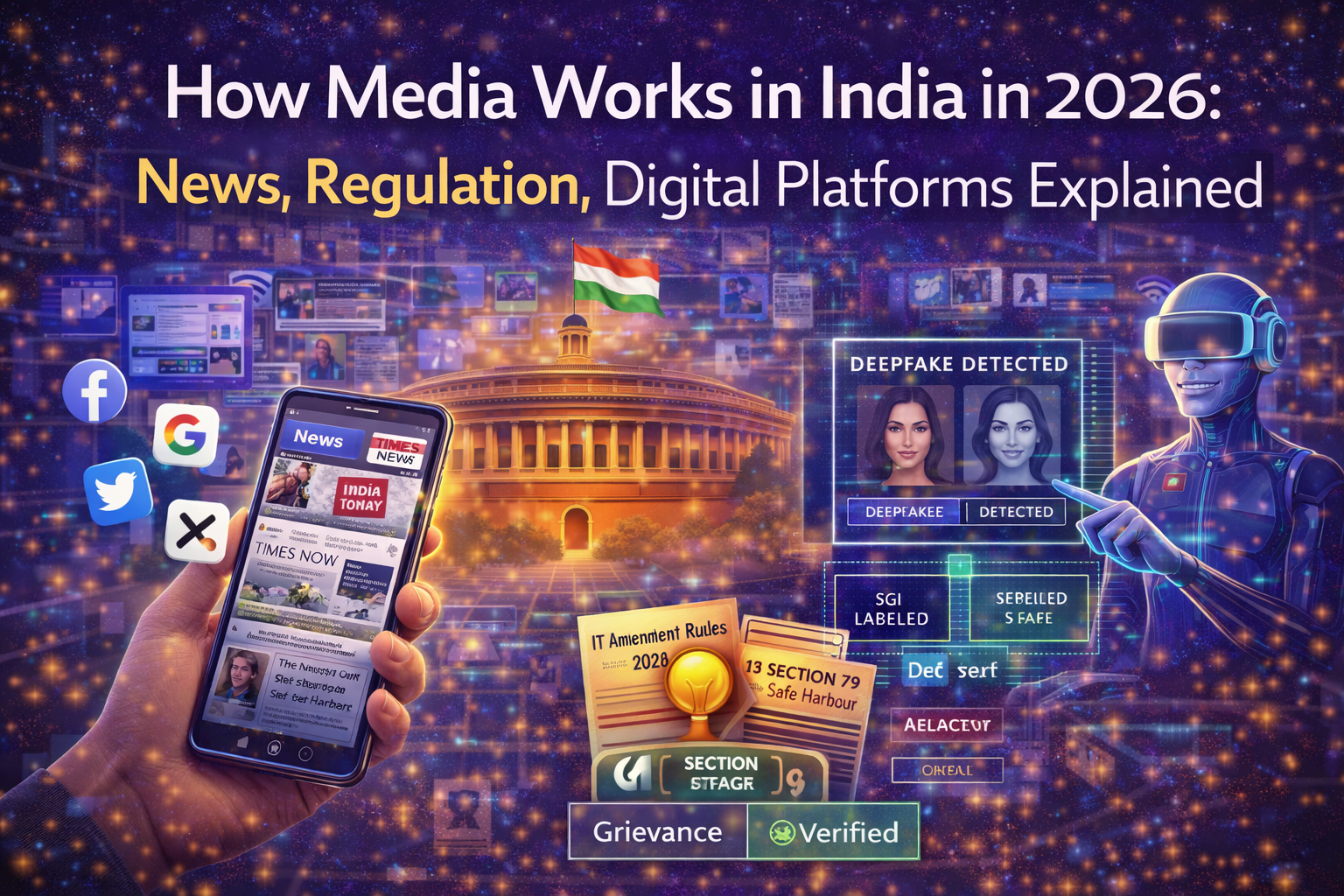
Media shapes how people think, vote, and react. In India, this influence has grown rapidly with mobile internet and social platforms. However, speed and scale have also increased risks. Consequently, understanding the system behind news delivery matters more than ever, now let understand how media work.
This article explains How Media Works in India in 2026 in simple terms. It covers digital first news flow, AI generated content, regulation, and real challenges. Additionally, it helps readers understand how information reaches them every day.
Traditional News Media in India
Traditional media still plays a meaningful role. Television debates, newspapers, and radio reach millions daily. However, their dominance has reduced compared to previous decades.
Reporters gather information from field sources, agencies, and officials. Editors verify facts before publication. Consequently, editorial checks remain central to credibility.
Regional language media continues to influence local politics strongly. Therefore, traditional media still matters, even in a digital world.
How Media Works in India in 2026: Digital First Reality
Digital media has shifted from a fast environment to an instant one. With India crossing one billion smartphone users in 2026, news consumption is now almost entirely mobile driven. Consequently, people receive breaking news within seconds.
Platforms such as Google, Meta Platforms, and X Corp act as major gateways. They do not create news. However, they control visibility through algorithms.
Short videos, notifications, and trending topics dominate attention. Therefore, speed often competes with depth and accuracy.
The Rise of SGI and AI Generated Content
A major change in 2026 is the legal recognition of Synthetically Generated Information, commonly called SGI. This term refers to audio or visual content created or altered by AI to appear real. Consequently, deepfakes now fall under defined legal categories.
New rules focus on transparency rather than banning AI entirely.
Key requirements include:
- Mandatory labeling of all AI generated or altered content
- Permanent metadata embedded in SGI for traceability
- Clear disclosure so users are not deceived
This transparency chain allows authorities to trace the origin of deepfakes. Additionally, it discourages anonymous misuse of AI tools.
Role of Government Regulation
Media regulation in India saw its biggest overhaul with the IT Amendment Rules, 2026. The regulatory approach shifted from reactive monitoring to proactive accountability. Consequently, platforms now face tighter deadlines.
The Ministry of Electronics and Information Technology oversees digital intermediaries and compliance.
Major regulatory changes include:
- Mandatory AI content labeling and verification
- Faster takedown timelines for illegal content
- Stronger grievance redressal requirements
These rules aim to reduce harm while preserving legitimate expression.
The 3 Hour Rule and Platform Accountability
Timelines for content removal have reduced sharply in 2026. Platforms must now act almost immediately after receiving orders.
Current timelines include:
- 3 hour takedown for content flagged illegal by courts or government
- 2 hour removal for non consensual deepfakes or impersonation
- 7 day resolution window for general user complaints
Additionally, platforms that knowingly permit or fail to label SGI risk losing Safe Harbour protection under Section 79 of the IT Act. Consequently, they can be held legally responsible like traditional newspaper editors.
Challenges Facing Indian Media
Stricter rules introduced new challenges. The need for speed has increased reliance on automated moderation. Consequently, over censorship has become a concern.
Key challenges include:
- Automated filters removing satire or parody by mistake
- Pressure to verify content within tight timelines
- Financial stress on independent journalism
To manage this, platforms now use AI assisted verification tools. These systems cross reference user declarations with digital provenance markers. Therefore, human editors and machines work together at scale.
The Role of Journalists and Creators
Journalists remain essential for investigation and context. However, creators and influencers now explain news in simpler formats. Consequently, narratives spread faster but also risk oversimplification.
Podcasts, newsletters, and explainers have grown. Additionally, audiences must judge credibility more carefully. Therefore, media literacy has become a critical skill.
Media in India now operates in a high speed, AI assisted environment. Traditional journalism, digital platforms, regulation, and users all shape outcomes.
Understanding How Media Works in India in 2026 helps people consume information responsibly. Additionally, awareness reduces misinformation impact. Consequently, informed audiences strengthen public discourse and democracy.
Frequently Asked Questions(FAQ)
1. What is SGI in Indian media regulation?
SGI refers to AI generated or altered audio visual content that appears real and must now be labeled.
2. Who regulates digital media platforms in India?
Digital platforms fall under guidelines issued by the Ministry of Electronics and Information Technology.
3. Can platforms be held responsible for user content in 2026?
Yes. Platforms that fail to label or knowingly allow illegal SGI can lose Safe Harbour protection and face legal liability.
Other Articles

How Is Ramadan 2026 Observed Around the World? Traditions Explained
How APIs Work Explained Simply for Beginners Step by Step in 2026