
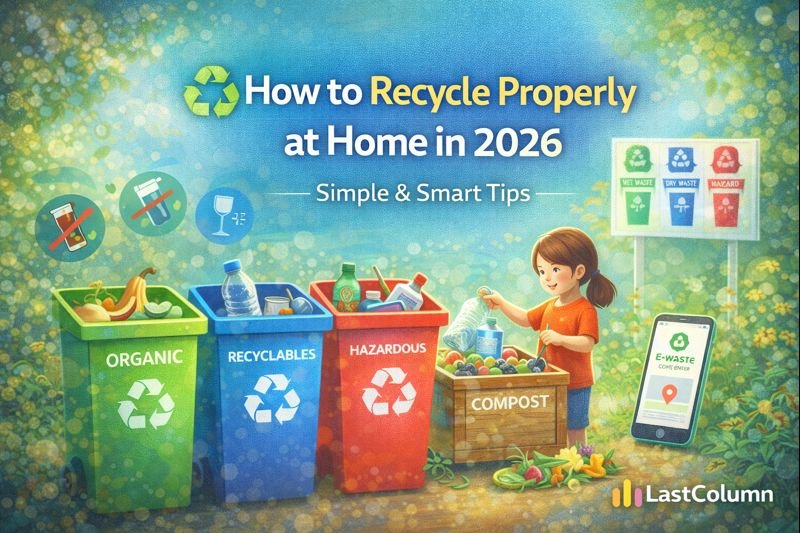
With increasing pollution, overflowing landfills, and climate change concerns, recycling at home has become more important than ever. In 2026, proper recycling is not just an eco-friendly habit — it’s a responsibility.
This guide explains how to recycle properly at home, step by step, using practical methods that align with modern waste-management systems and Google’s latest content quality guidelines (helpful, original, people-first content).
Why Recycling Properly Matters in 2026
Proper recycling helps to:
- Reduce landfill waste
- Save natural resources
- Lower carbon emissions
- Prevent soil and water pollution
- Support a circular economy
Incorrect recycling (called wish-cycling) can actually harm the environment, so doing it the right way matters.
1. Step 1: Segregate Waste Correctly at Home
The most important rule of recycling is waste segregation.
🟢 Dry Waste (Recyclable)
- Paper & cardboard
- Plastic bottles and containers
- Glass bottles
- Metal cans
🟤 Wet Waste (Organic)
- Food scraps
- Vegetable peels
- Tea leaves
- Garden waste
🔴 Hazardous Waste
- Batteries
- E-waste
- Medicines
- Paint containers
👉 Tip: Use separate bins and label them clearly.
2. Step 2: Clean Before You Recycle
Dirty waste cannot be recycled properly.
Always:
- Rinse plastic bottles
- Remove food residue
- Dry items before placing them in the recycling bin
Clean recyclables increase the chance of being processed correctly.
3. Step 3: Know What NOT to Recycle
Many people unknowingly recycle the wrong items.
❌ Do NOT recycle:
- Plastic bags (most types)
- Greasy pizza boxes
- Disposable cutlery
- Used tissues
- Broken glass (wrap and dispose separately)
Check your local recycling guidelines for accuracy.
4. Step 4: Reduce & Reuse Before Recycling
Recycling is good — but reducing waste is even better.
Try this at home:
- Carry cloth bags
- Use refillable bottles
- Buy products with minimal packaging
- Reuse jars and containers
Less waste means less recycling pressure.
5. Step 5: Handle E-Waste Separately
In 2026, electronic waste is one of the fastest-growing waste types.
Recycle responsibly:
- Mobile phones
- Chargers
- Earphones
- Old laptops
Use authorized e-waste collection centers or brand take-back programs.
6. Step 6: Compost Organic Waste
Composting is the best solution for kitchen waste.
You can compost:
- Fruit & vegetable peels
- Coffee grounds
- Eggshells
Benefits:
- Reduces garbage
- Produces natural fertilizer
- Improves soil health
Even apartment homes can compost using small bins.
7. Step 7: Teach Recycling Habits at Home
Involve your family:
- Teach children about waste segregation
- Make recycling a daily habit
- Place posters near bins
Consistency builds long-term eco-friendly behavior.
Common Recycling Mistakes to Avoid
- Mixing wet and dry waste
- Recycling dirty plastic
- Throwing batteries in regular bins
- Assuming all plastic is recyclable
Avoiding these mistakes makes recycling effective.
Recycling Checklist for Home (2026)
✔ Separate waste daily
✔ Clean recyclables
✔ Compost organic waste
✔ Dispose of e-waste safely
✔ Reduce single-use plastic
Learning how to recycle properly at home in 2026 is one of the simplest yet most powerful steps you can take for the planet. Small daily actions lead to big environmental impact.
Recycling is not about perfection — it’s about responsibility and consistency.
Other Articles

Difference Between Spirituality and Religion
Weight Loss Indian Diet Plan for 2026 — Easy Meal Plan & Tips