
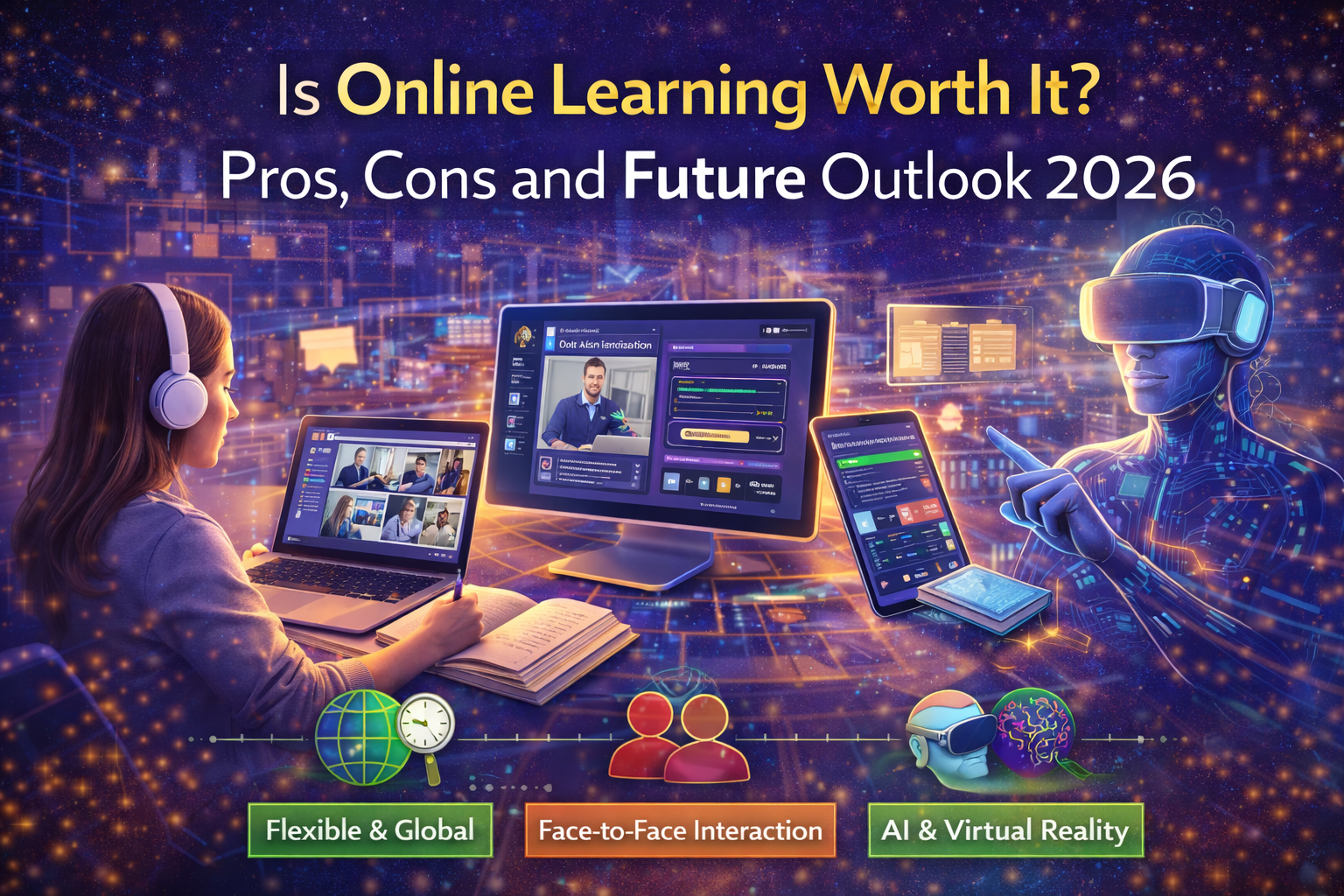
Education has changed more in the last decade than in the previous century. Let us know Online Learning 2026. High speed internet and digital tools transformed how people learn. However, many still question its long term value. Consequently, debates around effectiveness and quality continue.
This guide on Online Learning 2026 explains the full picture. It covers benefits, challenges, and what lies ahead. Additionally, it helps students, parents, and professionals make informed decisions.
What Is Online Learning Today?
Online learning refers to education delivered through digital platforms. It includes recorded videos, live classes, quizzes, and interactive tools. However, modern platforms now go far beyond simple video lectures.
Learners can access courses from global universities and industry experts. Additionally, progress tracking and certifications add structure. Consequently, online education now competes with traditional classrooms.
In 2026, online learning blends technology, flexibility, and personalization.
Online Learning: Pros, Cons & Future 2026 Explained Clearly
Understanding both advantages and limitations is essential. Blind optimism creates disappointment. However, ignoring benefits limits growth.
Online learning works best when expectations stay realistic. Therefore, let us break it down logically.
Major Advantages of Online Learning
Online education offers flexibility that traditional systems struggle to match. Learners control pace, schedule, and environment. Consequently, education fits around work and personal life.
Key benefits include:
- Flexible schedules for students and working professionals
- Access to global instructors and updated content
- Lower costs compared to campus based education
Additionally, learners can revisit lessons anytime. Therefore, retention often improves for self motivated students.
Online learning also supports career switching. Short courses help people gain skills quickly without leaving jobs.
Common Challenges and Limitations
Despite advantages, online learning is not perfect. Some learners struggle without structure. Consequently, dropout rates remain a concern.
Major challenges include:
- Lack of face to face interaction and peer bonding
- Requires strong self discipline and time management
- Limited hands on experience for practical subjects
Additionally, screen fatigue affects long study sessions. Therefore, learners must balance digital and offline activities.
Another issue is content quality variation. Not all courses meet the same standards. Consequently, platform selection matters greatly.
How Online Learning Impacts Careers
Employers increasingly accept online certifications. However, they focus more on skills than certificates alone. Consequently, practical application becomes crucial.
Online learning helps professionals upskill in areas like technology, marketing, and design. Additionally, portfolio based evaluation reduces degree dependency.
However, degrees still matter in regulated fields. Therefore, online learning complements rather than replaces formal education.
The strongest advantage lies in continuous learning. Careers now require regular updates, not one time degrees.
The Role of Technology in Future Learning
Technology shapes how online education evolves. Artificial intelligence personalizes learning paths. Additionally, analytics track progress and gaps.
Virtual reality and simulations improve practical training. Consequently, fields like medicine and engineering benefit more. Gamification also increases engagement.
Key trends shaping the future include:
- AI driven personalized course recommendations
- Virtual labs and immersive simulations
- Hybrid models combining online and offline learning
These innovations reduce the gap between digital and physical classrooms.
What Online Learning Will Look Like in 2026
In 2026, online education focuses on outcomes rather than hours. Skill mastery matters more than attendance. Consequently, assessment methods evolve.
Micro credentials and modular courses gain popularity. Additionally, employers collaborate directly with platforms. Therefore, education aligns closely with job markets.
Institutions also adopt hybrid models. Students attend campus occasionally while learning online regularly. This balance improves accessibility without losing interaction.
Online learning becomes a permanent pillar, not a temporary alternative.
How to Succeed in Online Learning
Success depends on mindset and structure. Passive watching rarely works. Consequently, active participation matters.
Learners should set goals, follow schedules, and practice skills regularly. Additionally, engaging in forums improves understanding.
Choosing the right platform also matters. Accredited providers and industry aligned courses offer better value.
Online education continues to reshape global learning systems. However, it works best when used wisely. Understanding strengths and limitations prevents unrealistic expectations.
With Online Learning: Pros, Cons & Future 2026, the path becomes clearer. Online learning offers flexibility, accessibility, and innovation. Additionally, future technology will close many existing gaps. Consequently, those who adapt early will benefit most from this evolving education model.
Frequently Asked Questions(FAQ)
1. Is online learning as effective as classroom learning?
It can be equally effective for motivated learners. However, success depends on discipline and course quality.
2. Will online degrees be accepted in 2026?
Yes. Many employers already accept them, especially when combined with practical skills and portfolios.
3. What skills are best learned online?
Technology, business, design, and language skills work especially well with online learning platforms.
Other Articles
How APIs Work Explained Simply for Beginners Step by Step in 2026
Why Node.js in 2026 Still Powers Scalable Applications for Developers?