
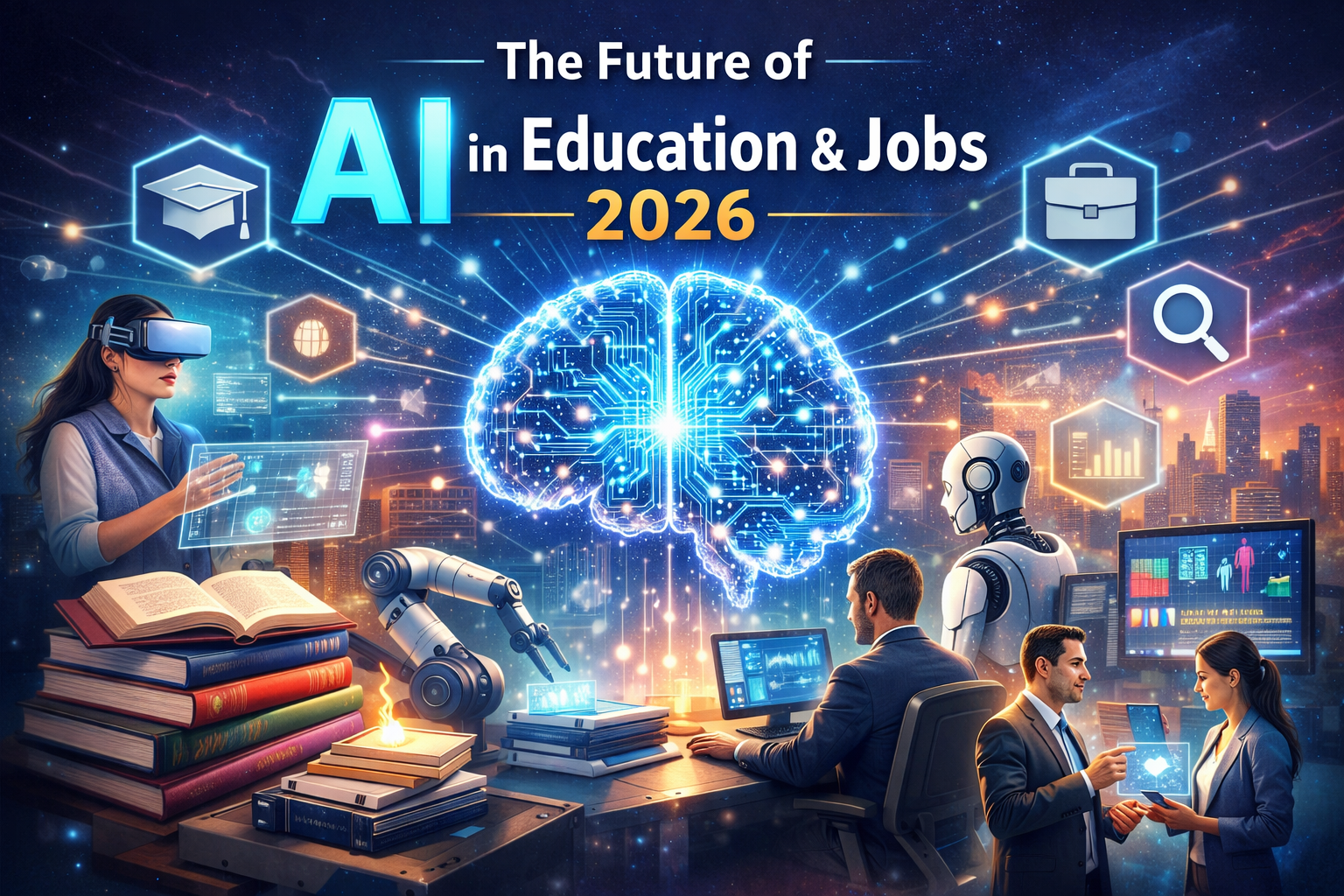
Artificial intelligence already shapes how we learn and work. However, 2026 will push this shift much further. Schools now use smart platforms, while companies depend on automation daily. Consequently, both students and professionals must adapt fast.
The Future of AI in education and jobs 2026 points toward personalized learning, smarter hiring, and new career paths. Additionally, it raises questions about skills, ethics, and job security. This guide explains what will change and how you can prepare without fear.
Future of AI in education and jobs 2026: What to Expect
AI will not replace humans completely. Instead, it will support decision making and remove repetitive tasks. Therefore, people can focus on creativity and strategy.
In education, AI tools analyze student behavior and suggest custom lessons. Teachers save time on grading and tracking progress. Meanwhile, students receive instant feedback and better study plans.
In the workplace, AI handles data analysis, chat support, and scheduling. Consequently, companies reduce costs and improve speed. However, employees must learn new digital skills to stay relevant.
AI in Education: Smarter, Faster, More Personal
Learning will feel less generic and more tailored. Platforms already track strengths and weaknesses. As a result, students learn at their own pace.
Additionally, virtual tutors will become common. These assistants answer questions anytime. Therefore, learning will not stop after school hours.
Key changes in education include:
- Personalized study plans created by AI analytics
- Automated grading that saves teachers hours each week
- Virtual simulations for science, coding, and medical training
Moreover, remote learning will improve with AI captions, translations, and voice tools. Consequently, global classrooms will become normal.
Teachers will not disappear. Instead, their role will evolve. They will mentor, guide, and support critical thinking while AI handles routine work.
AI in Jobs: Automation with Opportunity
Workplaces will also change quickly. Many routine tasks will become automated. However, new roles will appear at the same time.
For example, AI trainers, data analysts, and automation specialists are already in demand. Additionally, industries like healthcare, finance, and marketing rely heavily on machine learning.
Companies will look for workers who can collaborate with AI systems. Therefore, soft skills and technical literacy will matter equally.
Common job impacts include:
- Faster recruitment through AI screening tools
- Smart assistants that draft emails, reports, and code
- Predictive analytics that guide business decisions
Consequently, productivity will rise. However, employees must upgrade skills regularly to stay competitive.
Skills You Must Build Before 2026
Preparing early gives you an advantage. Fortunately, you do not need to become an engineer. Instead, focus on practical and adaptable skills.
Start with digital basics. Then, move toward problem solving and communication. Additionally, learn how AI tools work in your field.
Important skills for the next few years:
- Data literacy and basic coding knowledge
- Critical thinking and creativity
- Collaboration, communication, and adaptability
Moreover, online platforms now offer affordable courses. Therefore, continuous learning has never been easier.
Benefits and Risks to Watch
AI brings many benefits. However, ignoring risks can create problems.
On the positive side, AI improves efficiency and access. Students in remote areas can learn better. Additionally, businesses can innovate faster.
Yet privacy and job displacement remain concerns. Consequently, governments and companies must create ethical policies. Responsible AI use will decide long term success.
Balancing technology with human judgment will be essential. Therefore, people must stay informed and involved.
Conclusion
The coming years will reshape education and employment deeply. However, the change does not mean loss. Instead, it signals transformation.
The Future of AI in education and jobs 2026 rewards people who learn continuously and adapt quickly. Additionally, those who combine human creativity with smart tools will thrive. Start building skills today, and you will step confidently into tomorrow’s opportunities.
Frequently Asked Questions(FAQ)
1. Will AI replace teachers and employees completely?
No. AI supports tasks but cannot replace human judgment, empathy, and creativity.
2. Which careers will grow because of AI?
Data science, AI training, cybersecurity, digital marketing, and healthcare technology roles will grow strongly.
3. How can students prepare for AI driven jobs?
Learn digital skills early, practice problem solving, and use AI tools regularly for study and projects.
Other Articles

What Are the Top Upcoming Games in 2026 Every Gamer Should Watch?
Why Does Early Diagnosis Matter on World Cancer Day 2026?