
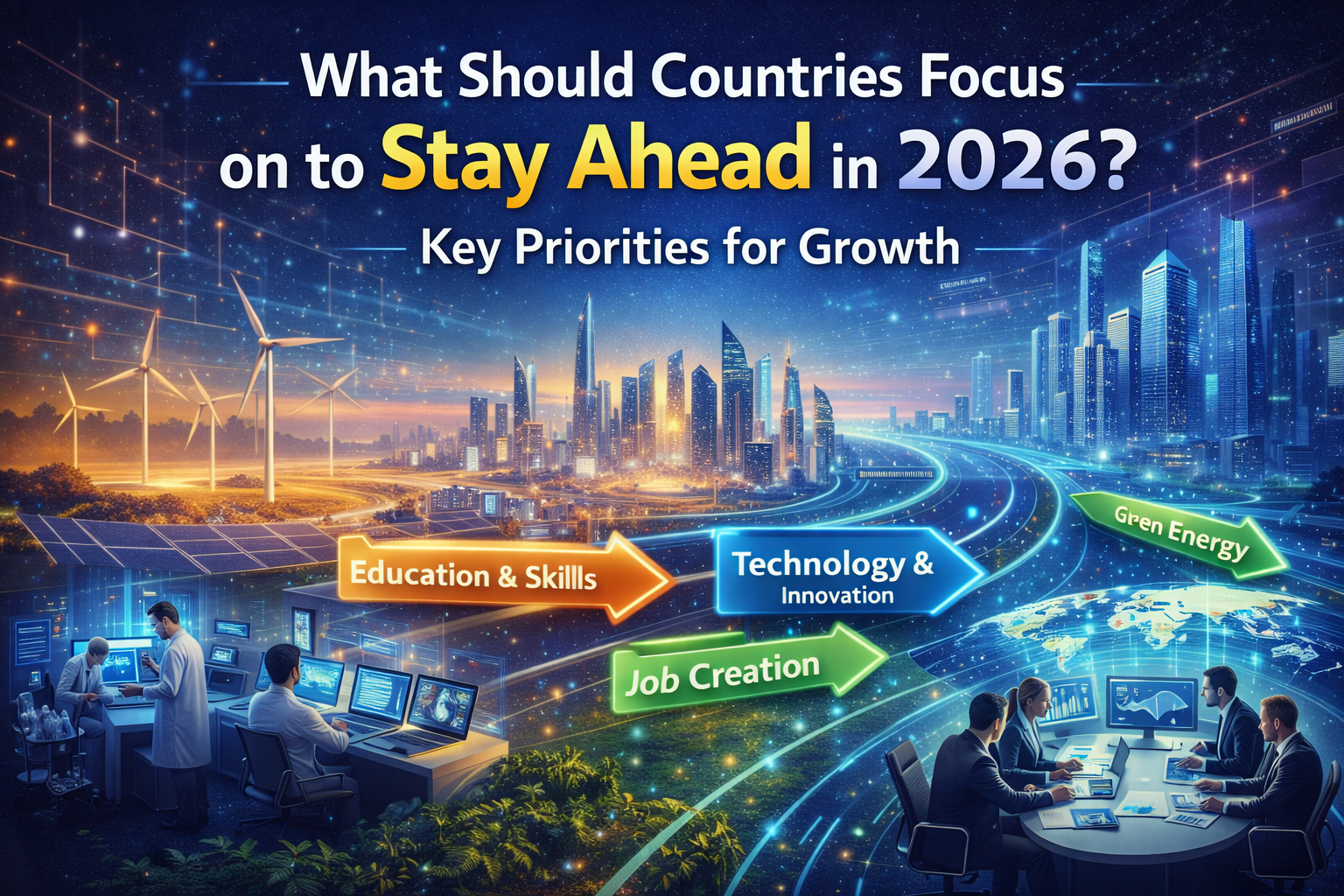
The global economy moves faster every year. However, 2026 will test countries more than ever. Technology shifts quickly, jobs evolve, and competition increases across industries. Consequently, nations that adapt early will lead, while others may struggle.
So, What Should Countries Focus on to Stay Ahead in 2026? The answer is not one single policy. Instead, it requires smart investment in people, innovation, and infrastructure. Additionally, governments must balance growth with sustainability and social stability.
This guide explains the key priorities every country should consider for long term success.
What Should Countries Focus on to Stay Ahead in 2026: Core Priorities
Strong economies share common habits. They invest in education, encourage innovation, and support businesses. Moreover, they build systems that respond quickly to change. Therefore, flexibility becomes just as important as strength.
Most experts agree on three broad pillars:
- Education and skills development
- Technology and digital transformation
- Sustainable and inclusive economic growth
Consequently, progress in these areas directly improves jobs, income, and quality of life.
Education and Future Skills
Education remains the foundation of national growth. However, traditional learning alone is no longer enough. Students must learn practical and digital skills early. Therefore, schools should update curriculums quickly.
Coding, AI basics, and data literacy now matter in almost every career. Additionally, communication and problem solving skills stay essential. Consequently, countries that modernize education produce a more adaptable workforce.
Governments should also promote vocational training. Not every job requires a university degree. However, technical skills often create stable employment faster.
Online learning platforms can help rural and remote areas. As a result, talent spreads beyond big cities. This balance strengthens the whole economy.
Technology and Digital Infrastructure
Technology drives productivity today. Therefore, countries must invest in fast internet, cloud systems, and cybersecurity. Without this base, innovation slows down.
Digital transformation helps both public and private sectors. For example, e governance services reduce paperwork and save time. Additionally, businesses use automation to increase output. Consequently, efficiency rises across the board.
Key focus areas include:
- Nationwide high speed internet and 5G access
- Support for startups and tech innovation hubs
- Strong cybersecurity and data protection laws
These steps attract global investors. Moreover, they create new industries and high paying jobs.
Countries that ignore digital upgrades risk falling behind quickly. Therefore, early adoption is critical
Job Creation and Entrepreneurship
Economic growth means little without jobs. However, traditional industries alone cannot absorb growing populations. Consequently, governments must encourage entrepreneurship.
Small businesses generate employment faster than large corporations. Additionally, startups often introduce new ideas and products. Therefore, easier loans and simplified regulations can help founders succeed.
Reskilling programs also matter. Workers displaced by automation need new opportunities. As a result, training centers should offer short, practical courses aligned with market demand.
When people feel secure about work, consumer spending increases. Consequently, the entire economy benefits.
Sustainable and Green Development
Growth must also protect the environment. However, many countries still rely heavily on fossil fuels. This approach creates long term risks.
Renewable energy offers a better path. Solar, wind, and clean technologies reduce pollution and create jobs simultaneously. Additionally, global investors prefer sustainable markets. Consequently, green policies attract more funding.
Governments should improve public transport and waste management. Therefore, cities become cleaner and healthier. Sustainable farming methods can also protect food security.
Balancing growth with environmental care ensures stability for future generations.
Strong Governance and Global Partnerships
Policies work only when governance stays transparent. Therefore, reducing corruption and improving accountability should remain top priorities. Clear rules build trust among citizens and investors.
Additionally, countries benefit from global partnerships. Trade agreements and research collaborations open new markets. Consequently, innovation spreads faster across borders.
Stable diplomacy also protects economic interests. As a result, nations can focus more on development than conflict.
Conclusion
The world will not slow down in 2026. However, prepared countries can turn challenges into opportunities. Smart planning today creates stronger economies tomorrow.
If we ask again, What Should Countries Focus on to Stay Ahead in 2026, the answer stays clear. Invest in education, embrace technology, create jobs, and protect sustainability. Additionally, maintain strong governance and global cooperation. These priorities together build lasting growth and resilience.
Frequently Asked Questions(FAQ)
1. Why is education the top priority for countries in 2026?
Education builds skilled workers. Consequently, industries grow faster and innovation increases.
2. How does technology help national growth?
Technology improves productivity and creates new industries. Therefore, economies expand more efficiently.
3. What role does sustainability play in economic success?
Sustainable policies protect resources and attract investment. As a result, growth remains stable long term.
Other Articles

ChatGPT vs Gemini vs Claude: Which AI Assistant Is Best in 2026?
Roadmap to learn JavaScript from scratch 2026