
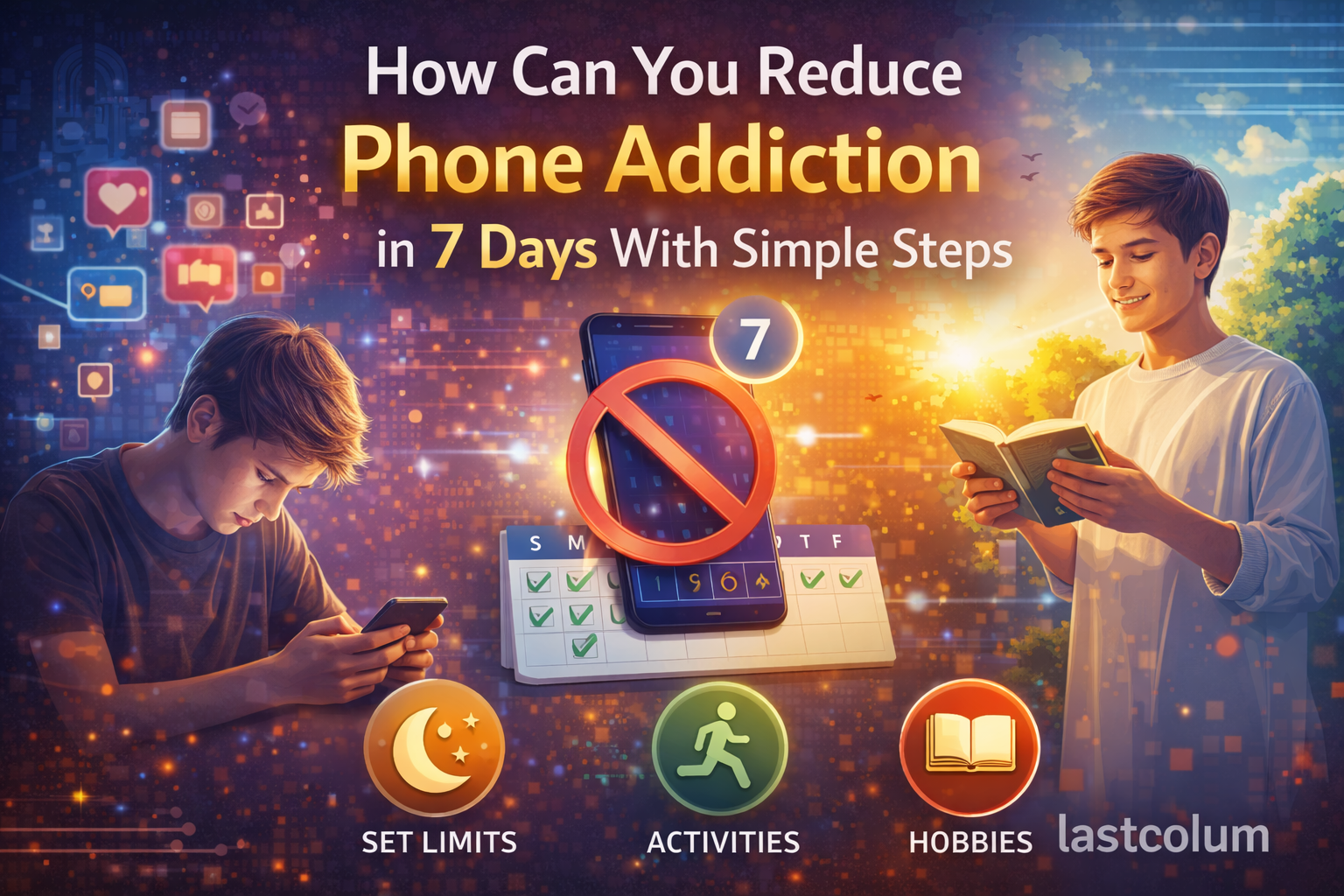
Smartphones help us work, learn, and connect. However, constant scrolling quietly drains time and focus. If you want to reduce phone addiction without extreme rules, a short plan works best. This seven-day approach focuses on awareness, control, and habit change. Additionally, it fits into real life without requiring digital detox retreats or expensive apps.
The goal is progress, not perfection. Consequently, small daily actions can reset your relationship with your phone in just one week.
Why Phone Addiction Is Hard to Break
Phone addiction does not come from weak willpower. Instead, apps use notifications, infinite feeds, and rewards to keep attention locked. Moreover, stress and boredom increase screen time automatically.
Common signs include checking your phone without reason, feeling anxious without it, and losing time while scrolling. However, awareness alone does not solve the issue. Therefore, a structured plan makes change easier.
Day-by-Day Plan to Reduce Phone Addiction
Day 1: Track Your Usage Honestly
First, check your screen time report. Most phones already track daily usage. Additionally, note which apps consume the most time.
Write down:
- Total screen time
- Top three apps
- Peak usage hours
This step builds awareness. Consequently, you stop guessing and start acting on real data.
Day 2: Turn Off Non-Essential Notifications
Notifications trigger reflexive phone checks. Therefore, reducing them lowers impulse use immediately.
Disable alerts for social media, shopping apps, and games. However, keep calls and essential messages active. As a result, your phone becomes a tool again, not a constant interrupter.
Day 3: Create Phone-Free Zones
Physical boundaries work better than mental promises. Additionally, they remove temptation during key moments.
Use phone-free zones in:
- Bedroom
- Dining table
- Bathroom
These spaces improve sleep, digestion, and focus. Consequently, your brain starts associating rest with offline time.
Day 4: Replace Scrolling With Short Offline Habits
Removing a habit without replacement rarely works. Therefore, add simple offline actions.
Examples include stretching, journaling, or reading two pages of a book. Additionally, keep these activities easy. When boredom hits, your brain chooses the next available option.
Day 5: Use App Limits and Focus Modes
Now that awareness exists, add technical support. Set daily limits on your most distracting apps. Moreover, enable focus mode during work hours.
This does not block usage completely. Instead, it adds friction. Consequently, you pause before opening an app mindlessly.
How to Reduce Phone Addiction Without Quitting Technology
Quitting phones entirely is unrealistic. However, controlled use is achievable.
Follow these principles:
- Use apps intentionally, not automatically
- Keep your phone out of reach while working
- Charge your phone outside the bedroom
Additionally, treat your phone like a tool, not entertainment by default. This mindset shift supports long-term change.
Day 6: Schedule Intentional Phone Time
Restriction alone causes rebound behavior. Therefore, schedule guilt-free phone time.
Choose one or two fixed slots for social media. Additionally, set a timer before starting. When time ends, stop without negotiation. Consequently, your brain feels satisfied, not deprived.
Day 7: Review, Adjust, and Lock the Habit
On the final day, review your progress. Compare screen time from Day 1 to now. Moreover, note improvements in sleep, focus, or mood.
Decide:
- Which limits worked
- Which apps still need control
- Which habits felt natural
Lock these rules for the next 30 days. As a result, the change becomes permanent.
Learning how to reduce phone addiction does not require extreme measures. Instead, it needs structure, awareness, and consistency. This seven-day plan builds control gradually while respecting modern life. Consequently, your phone supports your goals instead of stealing your attention. If you want to reduce phone addiction long term, repeat this cycle every month and refine your limits.
Frequently Asked Questions(FAQs)
How many hours of phone use are considered addictive?
Phone use becomes addictive when it interferes with sleep, work, or relationships. However, quality matters more than total hours.
Can app blockers really help reduce phone addiction?
Yes, app blockers add friction. Consequently, they reduce impulsive usage when combined with habit changes.
How long does it take to break phone addiction?
Initial control improves within one week. However, lasting change usually takes 21 to 30 days of consistent habits.
Other Articles

How Did Naveen Patnaik Shape Odisha Politics Through His Leadership?