
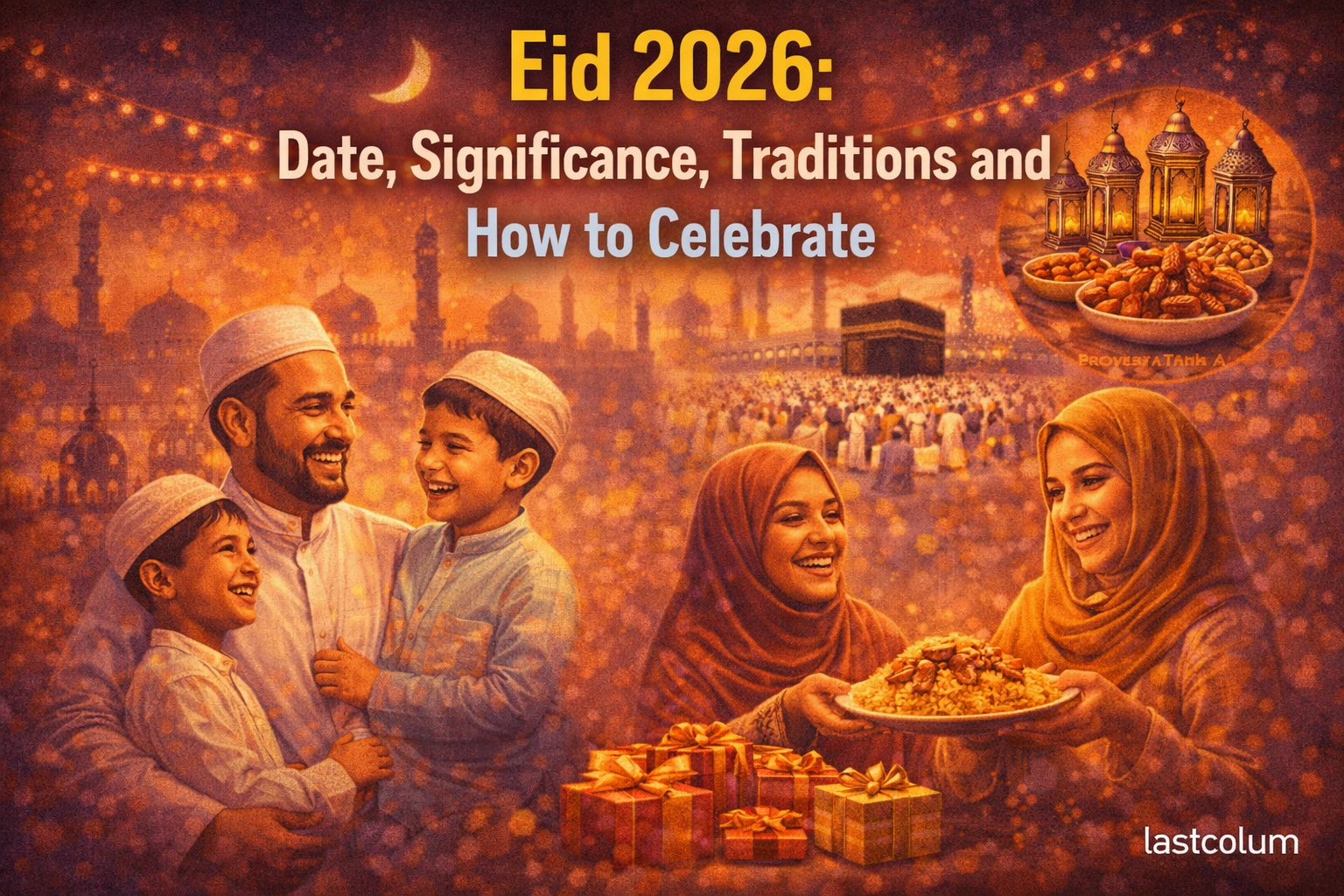
Eid al-Fitr 2026 falls on Friday, March 20 in most parts of the world, including India, Pakistan, Bangladesh, and the UAE. Saudi Arabia observed it a day earlier on March 19, following the moon sighting by the Shawwal Moon Sighting Committee. As always, the precise date in your region depends on the local sighting of the crescent moon.
Understanding Eid 2026, its date, significance, and traditions, helps both Muslims preparing to celebrate and anyone who wants to understand why this day carries such weight for 1.8 billion people globally.
What Is Eid al-Fitr and Why Does It Matter
Eid al-Fitr means “the festival of breaking the fast.” It marks the end of Ramadan, the Islamic month of fasting, prayer, and reflection. Muslims fast from dawn to sunset every day for 29 or 30 days. Eid is the day that follows.
The religious significance goes beyond ending the fast. Eid is a collective expression of gratitude. Muslims thank God for the strength to complete Ramadan and gather as a community. It is one of only two major religious festivals in Islam, alongside Eid al-Adha.
Furthermore, Eid serves as a social reset. Grudges are set aside. Families that have drifted apart through the year make a deliberate effort to come back together.
How Is Eid 2026 Celebrated
The day begins early. Muslims wake, bathe, wear their best clothes, and eat a small meal before the morning prayer. Fasting is forbidden on Eid itself, so this breakfast carries its own significance.
Eid prayer takes place in the morning at a mosque or open ground. Congregations are often enormous. In cities like Delhi, Karachi, Jakarta, and Cairo, hundreds of thousands gather together. The sermon that follows typically focuses on gratitude, community, and giving.
After prayer, the day shifts to celebration. Families visit each other. Children receive Eidi, small gifts of money from older relatives. In South Asia, sheer khurma anchors the feast. In the Arab world, mamoul cookies stuffed with dates are made weeks in advance. In West Africa, jollof rice and grilled meats fill the table.
Moreover, wearing new clothes on Eid morning is a tradition across regions, from the embroidered kurtas of Pakistan to the kaftans of Morocco to the baju kurung of Malaysia.
Zakat al-Fitr: The Obligation Before the Celebration
Before Eid prayer, every Muslim who can afford it must pay Zakat al-Fitr. This is a charity payment equivalent to roughly 2.25 kilograms of a staple food or its cash value, given on behalf of every household member.
The purpose is direct. Zakat al-Fitr ensures that people who are struggling can also participate in the celebration. It reaches those in need before Eid begins. This obligation is not separate from the spirit of the festival. It is built into it.
Eid in 2026 Specifically
In 2026, Eid arrives in late March, meaning Ramadan fell during late winter and early spring in the northern hemisphere. Fasting hours were moderate, typically around 13 to 15 hours depending on latitude.
For Muslims in India, Pakistan, and Bangladesh, March 20 is the expected date, subject to local moon sighting. The next Eid al-Fitr, in 2027, will fall approximately 10 to 11 days earlier, continuing the gradual shift of Islamic calendar dates through the Gregorian year.
Frequently Asked Questions
1. When is Eid al-Fitr 2026 in India and Pakistan?
Eid al-Fitr 2026 in India and Pakistan is expected on Friday, March 20, 2026, subject to local moon sighting. Saudi Arabia observed Eid on March 19 following their official announcement. Local religious authorities in each country make the final call based on the crescent sighting in that region.
2. What is the difference between Eid al-Fitr and Eid al-Adha?
Eid al-Fitr marks the end of Ramadan and celebrates the completion of the fast. Eid al-Adha, observed roughly 70 days later, commemorates Ibrahim’s willingness to sacrifice his son as an act of obedience to God. Both are major Islamic festivals, but their occasions, rituals, and timing are distinct.
3. What do people typically eat on Eid al-Fitr?
Eid food varies widely by region. In South Asia, sheer khurma, biryani, and seviyan are common. In the Arab world, mamoul cookies, dates, and lamb dishes are traditional. In West Africa, jollof rice and grilled meats feature prominently. The meal matters less than the act of gathering around it.
Other Articles