
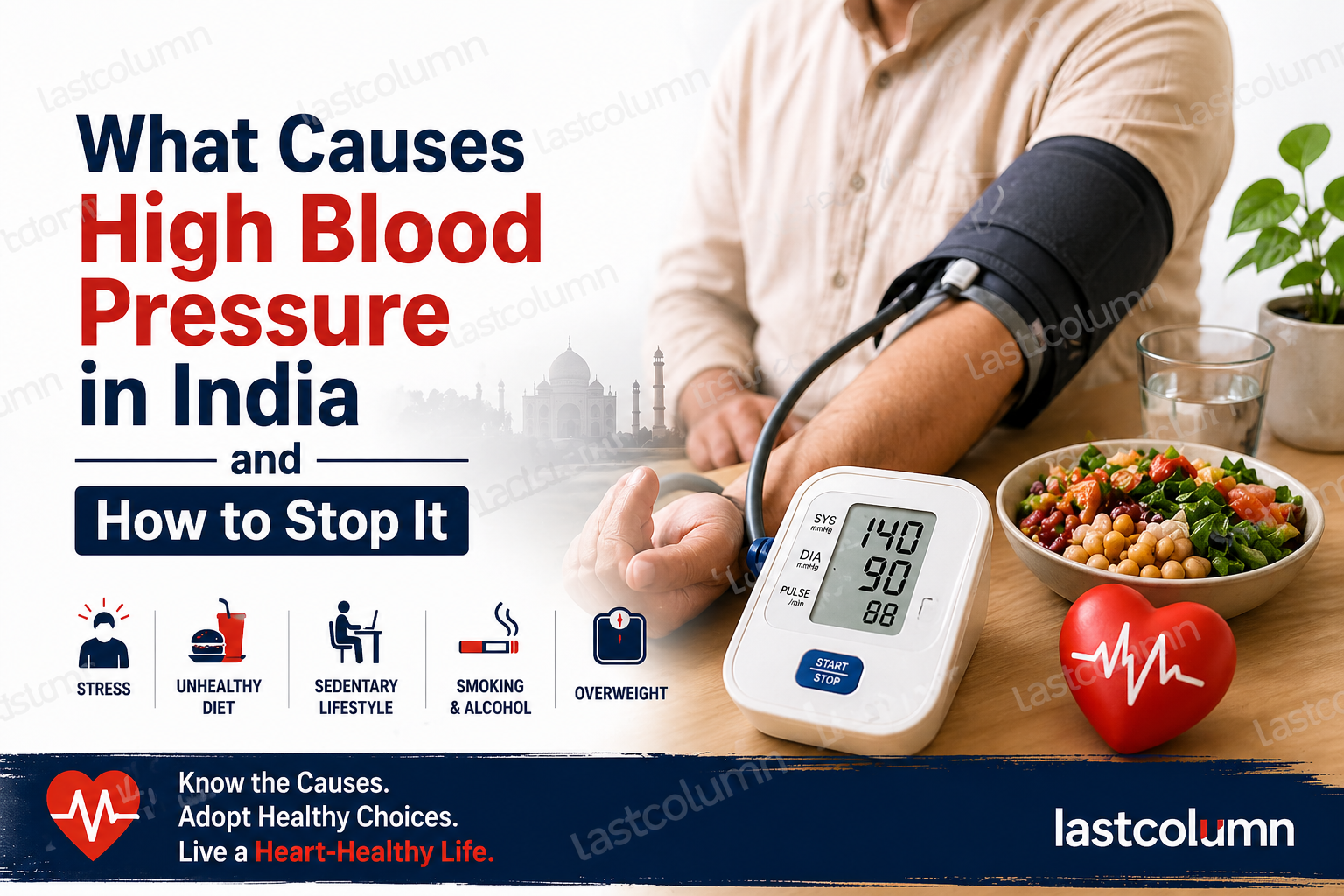
One in four adults in India has hypertension. Of those, fewer than one in eight has it under control.
Read that second number again. Not one in four. Not one in two. One in eight that is what WHO India’s data shows about blood pressure control rates among Indians who already have a diagnosis. The problem is not that people lack access to the information. Most people have heard that blood pressure can be dangerous. The problem is that hypertension does not make you feel sick. You can have it for years, feel completely fine, and then have a stroke.
That is the trap. And it catches millions of people every year.
What the Data Actually Says
A PMC published systematic review found that hypertension is directly responsible for 57 percent of all stroke deaths and 24 percent of all coronary heart disease deaths in India. The National Family Health Survey-5 which surveyed over 17 lakh individuals aged 15 and above found prevalence at 24 percent among men and 21 percent among women. Projections from that same data suggest prevalence could reach 44 percent by 2030.
These are not hypothetical numbers. They describe people alive today, sitting in homes and offices, with blood pressure high enough to cause damage, and no awareness of it.
The Causes People Do Not Talk About
Salt intake and obesity get mentioned often. Less discussed are the causes that are woven into daily Indian life.
The salt problem is hidden in ordinary food.
India’s average salt intake runs well above the WHO’s recommended 5 grams per day but most of that excess does not come from what people consciously add at the table. It comes from pickles eaten with every meal, papads, packaged namkeen, and processed foods that do not register as “salty” in the way chips might. The NFHS-5 analysis flagged dietary salt as one of the most significant modifiable risk factors for hypertension in Indian adults.
Urban stress is doing measurable damage.
Long commutes, financial pressure, job insecurity, and broken sleep all raise cortisol, and sustained cortisol elevation pushes blood pressure up. A 2024 BMC Public Health study drawing on NFHS-5 data found that sociodemographic stress factors independently predicted hypertension risk across age groups including, notably, people under 35. This is no longer a condition that waits until middle age.
Chewing tobacco carries cardiovascular risk most users do not associate with it.
People link smoking to heart disease. Fewer make the same connection with tobacco in chewed or smokeless form. The PMC systematic review found chewing tobacco to be a statistically significant risk factor for hypertension in India, alongside smoking and alcohol.
Central obesity reads differently on Indian bodies.
Waist circumference above 90 cm in men and 80 cm in women is classified as central obesity using Indian specific thresholds thresholds lower than those used globally. The NFHS-5 analysis identified central obesity as one of the strongest predictors of hypertension in the dataset, and many Indians who do not appear overweight by conventional BMI measures fall into this category.
Sitting for eight hours a day is not neutral.
Physical inactivity appears consistently in hypertension research as a direct contributor not just a background factor. When inactivity combines with poor diet, chronic stress, and poor sleep, the effect compounds. That combination describes a typical workday for a large portion of India’s urban workforce.
Symptoms Worth Paying Attention To
Hypertension earns its “silent killer” label because most people have no symptoms at all. But some do, and the signs are easy to dismiss as tiredness or stress.
Persistent morning headaches, especially at the back of the head, are one of the more commonly reported symptoms in people with uncontrolled high blood pressure. Others include dizziness when standing up suddenly, blurred vision without an obvious eye explanation, shortness of breath during mild activity that would not normally cause it, and a noticeable or irregular heartbeat.
None of these confirm hypertension on their own. Any one of them, appearing consistently, warrants a blood pressure check not a decision to wait and see.
What Actually Works
Medication for hypertension is effective and widely available. But for people in early or borderline stages, lifestyle changes produce real, measurable reductions in blood pressure not marginal ones.
Cut sodium deliberately, not vaguely. The target is under 5 grams per day. For most Indian diets, that means reducing pickles and papads significantly, reading labels on packaged food, and cutting back on added salt during cooking. “Eating less salt” as a general intention rarely works. The specific sources matter.
Add potassium rich foods in real quantities. Bananas, tomatoes, spinach, palak, and coconut water all help offset sodium’s effect on blood vessels. Most Indian diets include these foods, but not in the quantities that produce a blood pressure benefit. This is one adjustment that does not require eliminating anything it requires adding more of what is already present.
Walk for 30 minutes every day. Evidence reviewed by the Indian Journal of Public Health found that consistent moderate aerobic exercise lowers systolic blood pressure by 4 to 9 mmHg over time. That is a clinically meaningful drop, comparable to some medication effects. The key word is consistent — occasional exercise does not produce the same result.
Practice slow breathing with some structure. A 2025 clinical review in Frontiers in Cardiovascular Medicine confirmed that slow diaphragmatic breathing practiced for 10 to 15 minutes daily reduces sympathetic nervous system activity and produces measurable blood pressure reductions in hypertensive patients. This is not a vague stress-relief recommendation. It has a documented physiological mechanism.
Stop tobacco entirely, reduce alcohol significantly. Both have direct, dose dependent effects on blood pressure. There is no level of tobacco use that is safe for someone managing hypertension.
Treat sleep as a medical priority. Poor sleep quality raises blood pressure independent of other factors. Seven to eight hours of consistent sleep is not a lifestyle preference for someone managing blood pressure, it is part of the treatment.
The Real Gap
The India Hypertension Control Initiative recently reported improvement in blood pressure control rates from 37 percent to 48 percent across participating districts. That is genuine progress. But 48 percent control means the majority of people with hypertension in those districts are still not managing it adequately even in areas with active intervention programs.
The barrier is not primarily access to treatment or information. It is the absence of urgency in people who feel fine. Hypertension does not hurt. A stroke does. The two-minute blood pressure check at a pharmacy or health camp is the gap between knowing and not knowing and for most adults in India, that check is overdue
Frequently Asked Questions(FQAs)
What is the main cause of high blood pressure in India?
Research from multiple national surveys including NFHS-5 points to a combination of causes: high dietary salt intake, physical inactivity, central obesity (excess abdominal fat), tobacco and alcohol use, and chronic psychological stress. Urban Indians face all five simultaneously. Age is also a significant factor, with prevalence rising sharply after 40. However, cases in people under 35 are also increasing, driven primarily by sedentary lifestyles and stress.
What are the early warning signs of high blood pressure?
Hypertension often produces no symptoms, which is why regular monitoring matters. When symptoms do appear, they include persistent headaches at the back of the head (especially in the morning), dizziness when standing, blurred vision, shortness of breath during mild exertion, and a pounding or irregular heartbeat. These symptoms are not diagnostic on their own but should prompt an immediate blood pressure check rather than being dismissed.
Can high blood pressure be controlled naturally without medication?
For mild to moderate hypertension, lifestyle interventions can produce meaningful reductions in blood pressure. Cutting sodium intake, exercising for 30 minutes daily, losing abdominal weight, quitting tobacco, reducing alcohol, and practicing slow breathing exercises each carry documented effects. However, moderate to severe hypertension typically requires medication alongside lifestyle changes. Anyone with a reading above 140/90 mmHg should consult a doctor before relying solely on natural approaches.
Other Articles
How Does the Instagram Algorithm Work in 2026?