
Astrology has fascinated humans for thousands of years. People read horoscopes, check zodiac signs, and discuss planetary movements daily. However, confusion often arises between belief and exaggeration. Consequently, many either trust astrology blindly or dismiss it completely.
This guide on Astrology Myths and Facts Explained Simply helps you understand what astrology truly offers in 2026. Additionally, it separates cultural myths from practical insights. The goal is not to convince or reject, but to explain clearly so you decide wisely.
What Astrology Actually Is
Astrology studies how planetary positions relate to human behavior and life patterns. It focuses on cycles, timing, and tendencies. However, it does not claim to control events directly.
Astrology works on observation and symbolism. Consequently, it identifies patterns rather than fixed outcomes. Birth charts, for example, map planetary positions at birth. They describe personality traits, not guaranteed futures.
Modern astrology blends psychology with tradition. Therefore, many people use it for self reflection rather than prediction alone.
Astrology Myths and Facts Explained Simply: Common Misunderstandings
Many myths spread because astrology gets oversimplified. Daily horoscopes often create unrealistic expectations. Consequently, people assume astrology predicts everything exactly.
Let us clear some common myths:
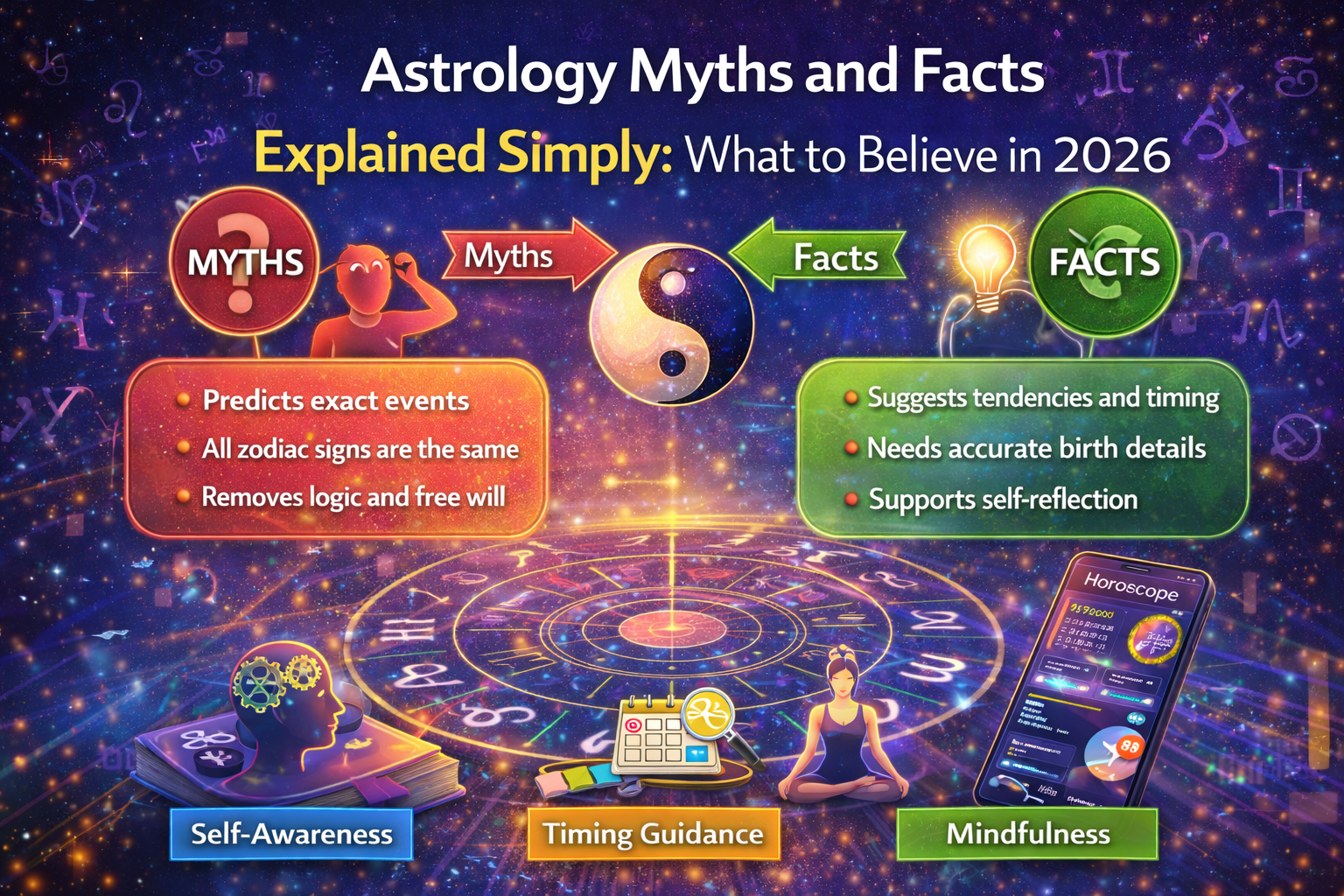
- Astrology can predict exact events like accidents or death
- Everyone with the same zodiac sign is identical
- Astrology replaces logic, effort, or free will
These ideas are inaccurate. Astrology does not remove personal choice. Additionally, sun signs alone never define a person fully.
Understanding this distinction helps prevent disappointment and misuse.
Real Facts About Astrology You Should Know
Astrology has limits, but it also has practical value. When used correctly, it offers insight instead of control.
Key facts include:
- Astrology highlights tendencies, not fixed outcomes
- Accurate charts require full birth details, not just zodiac signs
- Astrology works best as a guidance tool, not a decision maker
Consequently, responsible astrologers avoid extreme claims. They encourage self awareness rather than dependency.
Many people use astrology for timing important actions. However, they still rely on planning and effort. Therefore, astrology complements life choices instead of replacing them.
Why Astrology Still Matters in 2026
Despite scientific progress, astrology remains popular. However, its role has evolved. People now seek meaning, balance, and clarity in busy lives. Consequently, astrology serves as a reflection tool.
In 2026, astrology often connects with mental wellness. Users explore personality strengths, emotional patterns, and stress cycles. Additionally, digital platforms provide personalized charts instead of generic horoscopes.
Astrology also helps people pause and reflect. Therefore, its value lies more in awareness than prediction.
What You Should Believe and What to Avoid
Balanced belief matters. Blind faith creates dependency, while total rejection ignores cultural value. Consequently, moderation works best.
You can believe in astrology as:
- A tool for understanding personality and timing
- A cultural system with symbolic meaning
- A method for self reflection and mindfulness
However, avoid using astrology as the only basis for medical, financial, or legal decisions. Additionally, avoid astrologers who promise guaranteed results.
Critical thinking protects you from misinformation.
Astrology vs Science: Can They Coexist?
Astrology is not a science in the modern experimental sense. However, it does not need to replace science. Science explains how the universe works. Astrology explores how humans interpret meaning within it.
Many people enjoy astrology without rejecting science. Consequently, both can coexist when used appropriately. One focuses on evidence, the other on symbolism and introspection.
Understanding this difference prevents unnecessary conflict.
How to Use Astrology Responsibly
Responsible use starts with the right mindset. Treat astrology as guidance, not destiny. Additionally, question exaggerated claims.
Use astrology to reflect on habits, relationships, and timing. However, verify important decisions with facts and professionals. Consequently, you gain insight without risk.
The healthiest approach blends intuition, logic, and self responsibility.
Astrology continues to influence modern life. However, clarity matters more than belief alone. Separating exaggeration from insight helps you avoid confusion.
With Astrology Myths and Facts Explained Simply, the truth becomes clearer. Astrology offers patterns, not promises. Additionally, it supports self understanding when used wisely. Consequently, in 2026, the smartest belief is balanced belief.
Frequently Asked Questions
1. Is astrology scientifically proven?
No. Astrology is not proven by modern scientific methods. However, many people value it for symbolic and psychological insight.
2. Can astrology predict the future accurately?
Astrology suggests tendencies and timing. It does not guarantee exact events or outcomes.
3. Should I trust online horoscope apps?
Use them for general guidance only. Additionally, avoid making major life decisions based solely on app predictions.
Other Articles

Why Node.js in 2026 Still Powers Scalable Applications for Developers?
How to Follow Next.js App Best Practices 2026 for Speed and SEO?