
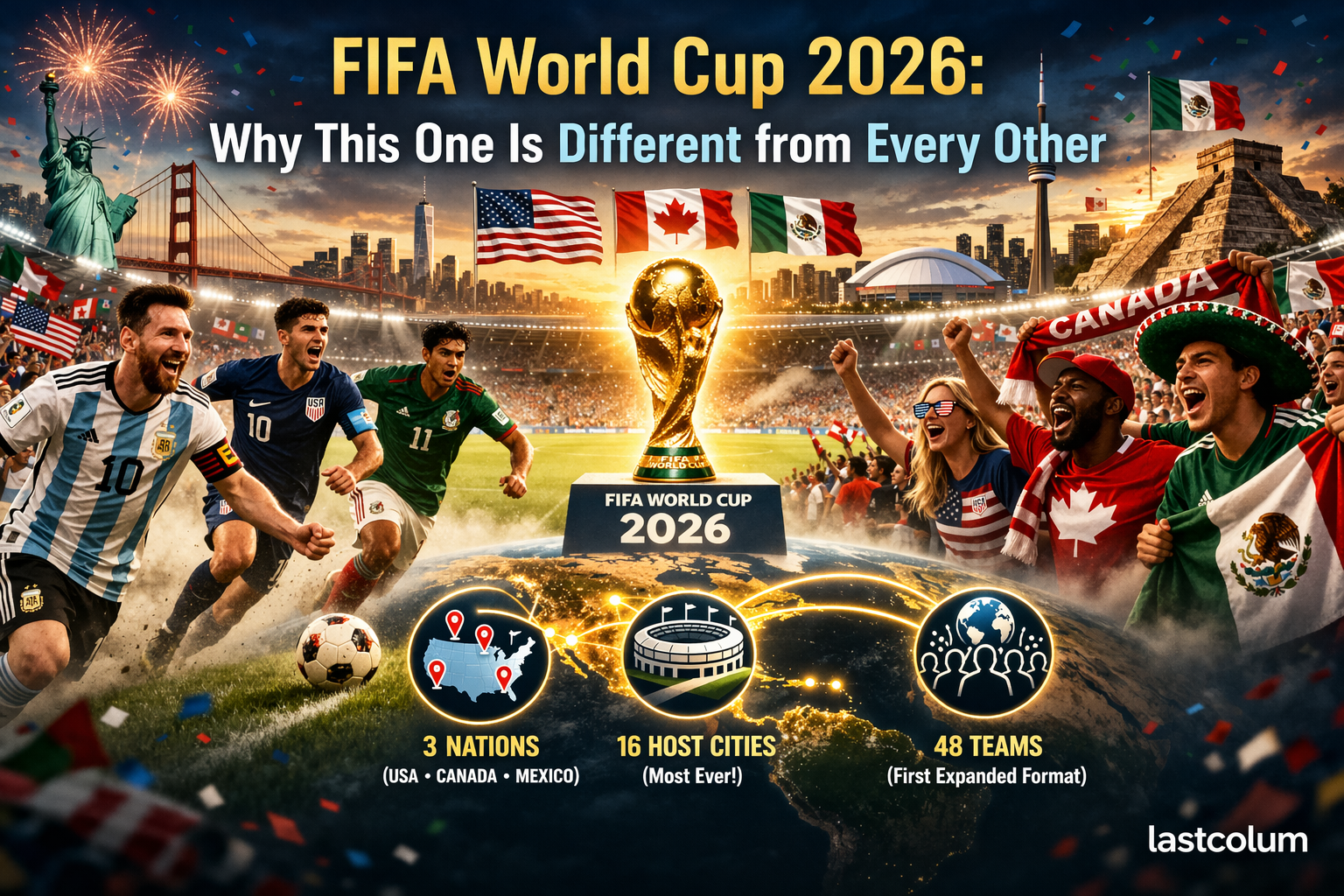
Every World Cup gets called historic. Most are not, at least not in ways that change the tournament permanently. FIFA World Cup 2026 is different. The changes it introduces are not cosmetic. Several will define what the World Cup looks like for decades.
Here is what sets this edition apart.
Three Countries, One Tournament, 16 Cities
The 2026 FIFA World Cup is the first to be hosted by three nations. The United States, Canada, and Mexico share 16 host cities: eleven in the US, three in Mexico, and two in Canada.
This has never happened before. The closest comparison is Japan and South Korea in 2002, but that involved two neighboring countries in a compact geography. The 2026 edition stretches from Vancouver on Canada’s west coast to Boston on the US east coast, with Mexico City sitting at 2,240 metres above sea level in between.
The opening match takes place on June 11 at the Estadio Azteca in Mexico City. The final is scheduled for July 19 at MetLife Stadium in New Jersey. That 39-day window across three time zones creates logistical challenges no previous host has faced. For fans, it also creates genuine opportunities to travel between host cities and watch matches in very different environments.
48 Teams Instead of 32
This is the single biggest structural change in the tournament’s history. The expanded field features 48 teams, 16 more than Qatar 2022, competing across 12 groups of four.
The result is significant. Confederations that historically sent four or five teams now send more. Africa goes from five to nine teams. Asia goes from four to eight. Nations that could never reach a World Cup before now qualify. Some will lose early. A few will surprise.
The 48-team format produces 104 matches in total, 40 more than before. The knockout stage begins with a round of 32, another first.
There is a real concern here. More teams means more mismatches in the group stage. However, FIFA is betting that broader global participation matters more than tight early-round football. That is a reasonable trade-off to argue about.
The Prize Money Jumped Sharply
The winning team receives a record $50 million. Second place earns $33 million. The overall prize fund is $727 million, roughly 50 percent higher than Qatar 2022.
For smaller federations, this matters beyond the trophy. Prize money flows back to national associations and youth programmes. A deep run in 2026 could fund a decade of development for nations with limited football budgets.
A Final with a Half-Time Show
FIFA confirmed the 2026 World Cup final will include a half-time show at MetLife Stadium, with Coldplay involved, drawing direct inspiration from the NFL’s Super Bowl.
Whether you think that is a good idea says a lot about your relationship with football. But it signals something clear. FIFA is building a product for an audience that includes people who did not grow up watching the game. The US market is central to that strategy. The half-time show is not for the existing fan. It is for the next one.
What to Watch For
All three host nations enter as automatic qualifiers with different expectations. The United States carries genuine pressure on home soil. Mexico brings the weight of hosting history. Canada qualifies for the first time since 1986 and arrives with a young squad.
The draw took place at the Kennedy Center in Washington, D.C. in December 2025, dividing the 48 teams into four pots. The football itself will be the final measure. But the scale and structural changes mean FIFA World Cup 2026 leaves the tournament looking permanently different on the other side.
Frequently Asked Questions(FAQs)
1. When does FIFA World Cup 2026 start and end?
The tournament runs from June 11 to July 19, 2026. The opening match takes place at the Estadio Azteca in Mexico City. The final is at MetLife Stadium in New Jersey on July 19.
2. Which countries are hosting the 2026 FIFA World Cup?
The United States, Canada, and Mexico jointly host across 16 cities. The US has 11 host cities, Mexico has three, and Canada has two. This is the first World Cup hosted by three nations.
3. How many teams are in the 2026 FIFA World Cup and why did it expand?
48 teams compete in 2026, up from 32 in previous editions. FIFA expanded the format to give more confederations guaranteed spots. Africa sends 9 teams, Asia sends 8, and all six confederations have at least one guaranteed berth for the first time in the tournament’s history.