
Publishing a book once felt reserved for insiders. However, 2026 offers more paths than ever for first time authors. Technology, platforms, and global distribution changed the rules. Consequently, writers can publish faster while keeping creative control.
This guide explains How to publish your first book 2026 in a practical way. It covers preparation, publishing options, costs, and promotion. Additionally, it helps you avoid common mistakes that delay or derail new authors.
Understand What You Want to Publish
Before choosing a platform, clarify your book’s purpose. Fiction, nonfiction, and educational books follow different paths. However, all require planning.
Define your audience clearly. Consequently, your writing style and length become easier to decide. Additionally, knowing your audience helps with pricing and marketing later.
Also decide your format early. Print, ebook, and audiobook each have different requirements. Therefore, planning saves time and money.
How to Publish Your First Book 2026: Choose the Right Publishing Path
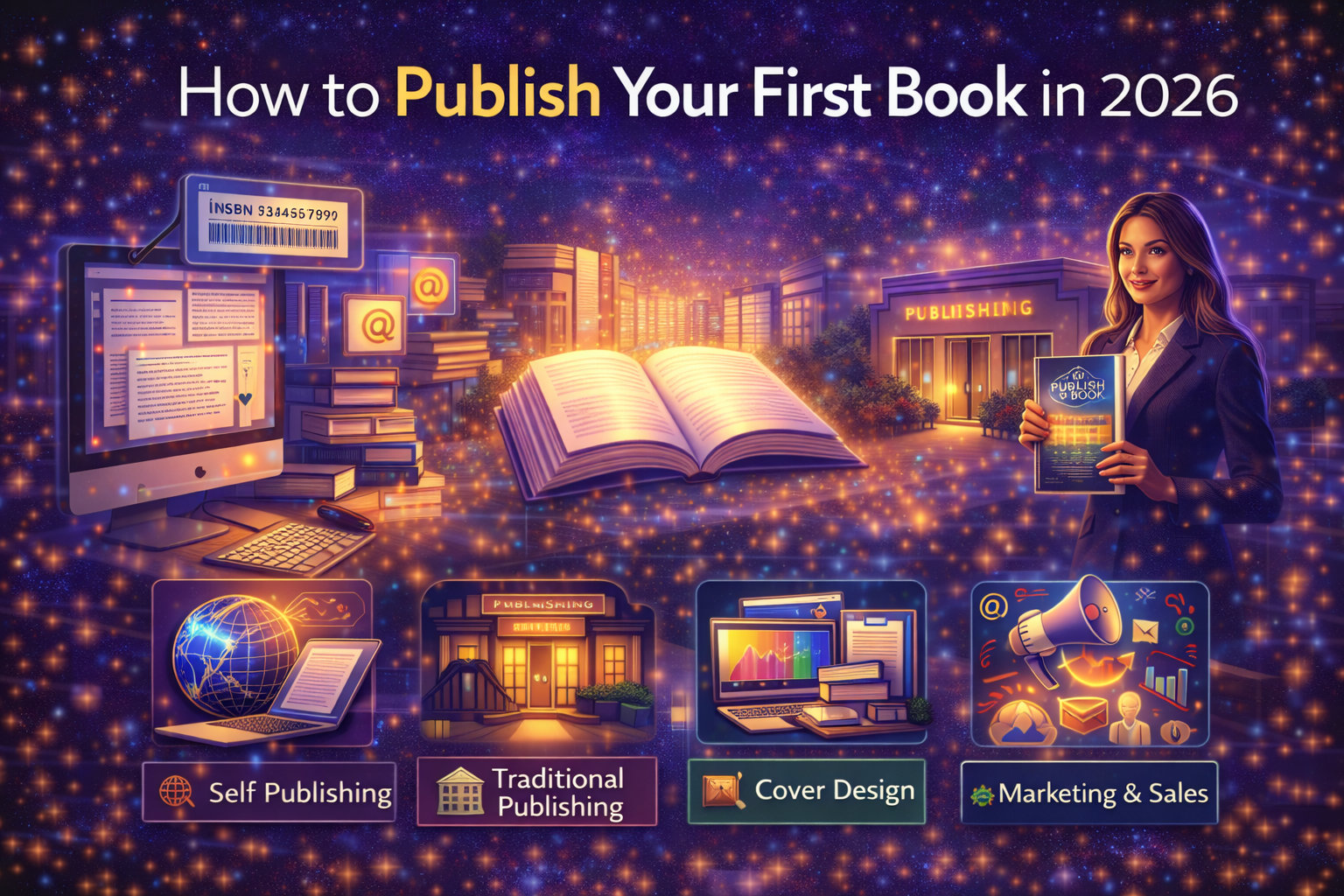
In 2026, authors typically choose between traditional publishing and self publishing. Each option has benefits and tradeoffs.
Traditional publishing involves agents and publishers. However, approval takes time and control remains limited. Self publishing offers speed and ownership. Consequently, many first time authors choose it.
Your main publishing options include:
- Traditional publishing through agents and publishers
- Self publishing via online platforms
- Hybrid publishing with shared costs and services
Choosing depends on your goals, budget, and timeline.
Prepare Your Manuscript Professionally
A finished draft is not enough. Editing makes the difference between amateur and professional work. Consequently, readers judge quality within pages.
Start with self editing to fix structure and clarity. Additionally, use beta readers for honest feedback. However, professional editing remains essential.
Cover design also matters greatly. Readers judge books visually first. Therefore, invest in a professional cover that matches your genre.
Formatting is another critical step. Print and ebook formats differ. Consequently, clean formatting prevents negative reviews
Uploading and Pricing Your Book
Once ready, upload your book files to your chosen platform. Metadata like title, description, and keywords affect discoverability. Consequently, optimize them carefully.
Pricing strategy matters more than many expect. New authors often start lower to attract readers. Additionally, promotional pricing helps during launch weeks.
Factors affecting pricing include:
- Genre expectations and reader habits
- Ebook versus print cost differences
- Platform royalty structures
Test pricing and adjust based on performance.
Marketing Your First Book Effectively
Publishing alone does not guarantee readers. Marketing begins before release. Consequently, authors should plan early.
Build a simple online presence. A website or social profile builds credibility. Additionally, email lists help announce launches.
Book reviews matter greatly. Encourage early readers to leave honest reviews. However, avoid fake or paid reviews that violate rules.
Marketing methods to focus on include:
- Social media announcements and snippets
- Email newsletters to interested readers
- Limited time discounts and promotions
Consistency matters more than viral success.
Common Mistakes First-Time Authors Make
Many authors rush publication. However, speed without preparation hurts long term success. Skipping editing or design often leads to poor reviews.
Another mistake is ignoring marketing. Consequently, books remain invisible despite quality. Additionally, unclear goals cause frustration.
Avoid comparing your journey to others. Publishing success takes time and persistence.
What Publishing Success Looks Like in 2026
Success no longer means bestseller lists alone. Many authors earn steady income through niche audiences. Consequently, smaller but loyal readerships matter more.
Authors now publish multiple formats and editions. Additionally, global distribution allows international reach. Therefore, patience and consistency pay off.
Your first book is a foundation, not a finish line.
Frequently Asked Questions(FAQs)
1. How long does it take to publish a first book?
Self publishing can take weeks. Traditional publishing may take a year or more.
2. Is self publishing respected in 2026?
Yes. Many successful authors now begin with self publishing.
3. Do I need marketing even if my book is good?
Yes. Marketing helps readers discover your book, regardless of quality.
Other Articles

Why Do Government Systems in India Often Move Slowly in 2026?
Is Claude Opus 4.6 vs GPT-5 the Better AI Model Choice in 2026?