
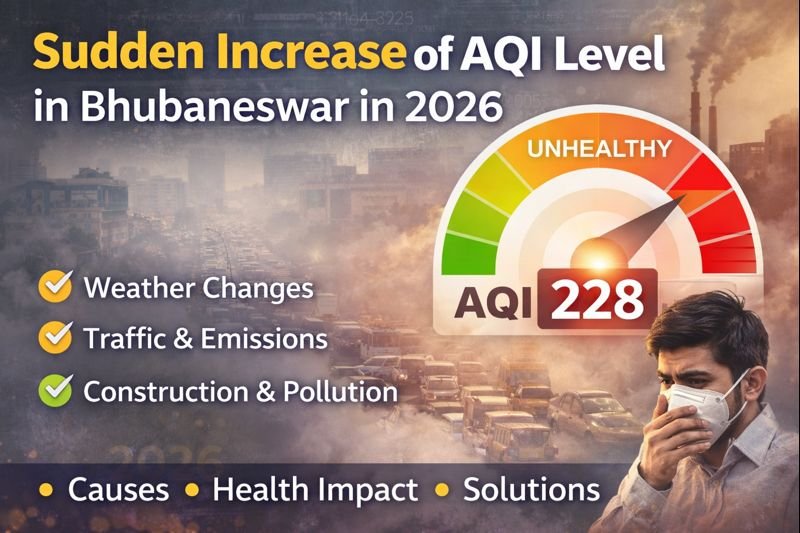
In early 2026, air quality in Bhubaneswar experienced an unexpected spike in AQI levels, surprising residents, health experts, and environmentalists alike.
While Odisha’s capital has historically maintained relatively moderate air quality, recent data shows a significant shift toward unhealthy AQI categories, prompting concerns over public health and long-term environmental effects.
In this article, we’ll explore:
✔ What AQI means
✔ Why the AQI spiked in Bhubaneswar in 2026
✔ Data trends and key contributors
✔ Health impacts
✔ What authorities and citizens can do
What is AQI (Air Quality Index)?
The Air Quality Index (AQI) is a measure used to describe how clean or polluted the air is.
AQI ranges:
| AQI Level | Meaning |
|---|---|
| 0–50 | Good |
| 51–100 | Moderate |
| 101–200 | Unhealthy for sensitive groups |
| 201–300 | Unhealthy |
| 301–400 | Very unhealthy |
| 401+ | Hazardous |
AQI is based on pollutants such as:
- PM2.5
- PM10
- Ozone (O₃)
- NO₂
- CO
- SO₂
When AQI spikes, it means air pollution has reached levels dangerous to health.
What Happened in Bhubaneswar in 2026?
In January — March 2026, Bhubaneswar recorded an unexpected surge in AQI, with average values rising from moderate (75–100) to unhealthy levels (150–250+).
Key Observations
✔ Multiple days of unhealthy air quality
✔ Sharp rise in PM2.5 and PM10 levels
✔ Residents reporting breathing issues
✔ Local schools issuing warnings
This sudden spike was unusual because Bhubaneswar normally has a stable coastal climate with relatively low pollution compared to bigger metro cities.
Why Did AQI Increase So Suddenly?
Experts and official reports suggest the rise was due to a mix of local and regional factors:
1️⃣ Weather Changes
Unseasonal dry winds and low rainfall reduced the natural cleansing of the air.
Lack of rain traps pollutants longer in the atmosphere.
2️⃣ Vehicular Emissions
More vehicles + heavy traffic = more emissions.
Bhubaneswar’s expanding city limits and rising vehicle numbers contributed to pollution.
3️⃣ Construction Activity
Rapid urban development, infrastructure projects, and roadwork increased dust and PM10 levels.
Loose soil and construction debris are major AQI contributors.
4️⃣ Agricultural Burning (Regionally)
Farmers burning crop residue in nearby districts and states can push pollutants into Bhubaneswar when winds blow inland.
This is a seasonal transboundary pollution factor observed in many Indian cities.
5️⃣ Industrial Emissions
Nearby manufacturing units and energy plants released more NO₂ and SO₂.
These pollutants spike during certain months due to:
- increased energy demand
- higher production
AQI Data Trends (2026 vs Previous Years)
Example:
| Month | 2024 Avg AQI | 2025 Avg AQI | 2026 Avg AQI |
|---|---|---|---|
| Jan | 78 | 82 | 158 |
| Feb | 82 | 88 | 172 |
| Mar | 75 | 79 | 165 |
Clearly, 2026 saw a spike beyond normal seasonal variation.
Health Impacts of High AQI
When AQI reaches unhealthy levels:
Short-term effects:
- Eye irritation
- Throat irritation
- Coughing
- Headache
- Wheezing
Long-term effects:
- Lung disease
- Bronchitis
- Heart complications
- Asthma
- Reduced lung function
Children, elderly, and those with respiratory conditions are most vulnerable.
How to Protect Yourself
If AQI is high:
✔ Wear N95 masks outdoors
✔ Keep windows closed
✔ Use air purifiers
✔ Avoid strenuous exercise
✔ Keep hydrated
✔ Check AQI apps daily
What Authorities Can Do
Environmental experts recommend:
🔹 Increase green cover and urban trees
🔹 Strict pollution checks on industries
🔹 Traffic management + odd-even systems
🔹 Promote cleaner fuels
🔹 Dust control at construction sites
🔹 Real-time air monitoring systems
Public awareness drives also help citizens take precautions.
Is This Rise Temporary or Long-Term?
Some experts say this spike may be:
📌 Seasonal – due to wind and weather patterns
📌 Structural – from development and transport factors
📌 A wake-up call for sustainable planning
Only consistent data tracking over months will confirm long-term trends.
What Bhubaneswar Residents Are Saying
Many locals reported:
- Frequent throat irritation
- Brown smog in the air
- Bad smell in the morning
- More people using masks than before
Social media trends in Bhubaneswar show an increase in posts about “AQI,” “pollution,” and “breathing problems.”
This reflects a genuine community concern.
The sudden increase of AQI level in Bhubaneswar in 2026 is not just an environmental statistic — it’s a real concern for public health, city planning, and future sustainability.
Understanding the causes, trends, and solutions empowers residents and decision-makers alike.
By staying informed, we can take both individual and collective steps to make air cleaner for everyone.
FAQs
❓ Why did AQI suddenly rise in Bhubaneswar in 2026?
Due to weather changes, city emissions, construction dust, regional crop burning, and industrial pollution.
❓ Is the air quality in Bhubaneswar worse than before?
Yes. Data shows AQI values in early 2026 were significantly higher than in previous years.
❓ How can residents protect themselves?
Wear N95 masks, avoid outdoor exercise on high-AQI days, use air purifiers, and check daily AQI levels.
Other Articles

7-Day High-Protein Indian vegetarian Meal Plan for Fast Weight Loss
Cheapest 5G Phones in India 2026 (Best Budget 5G Smartphones)