
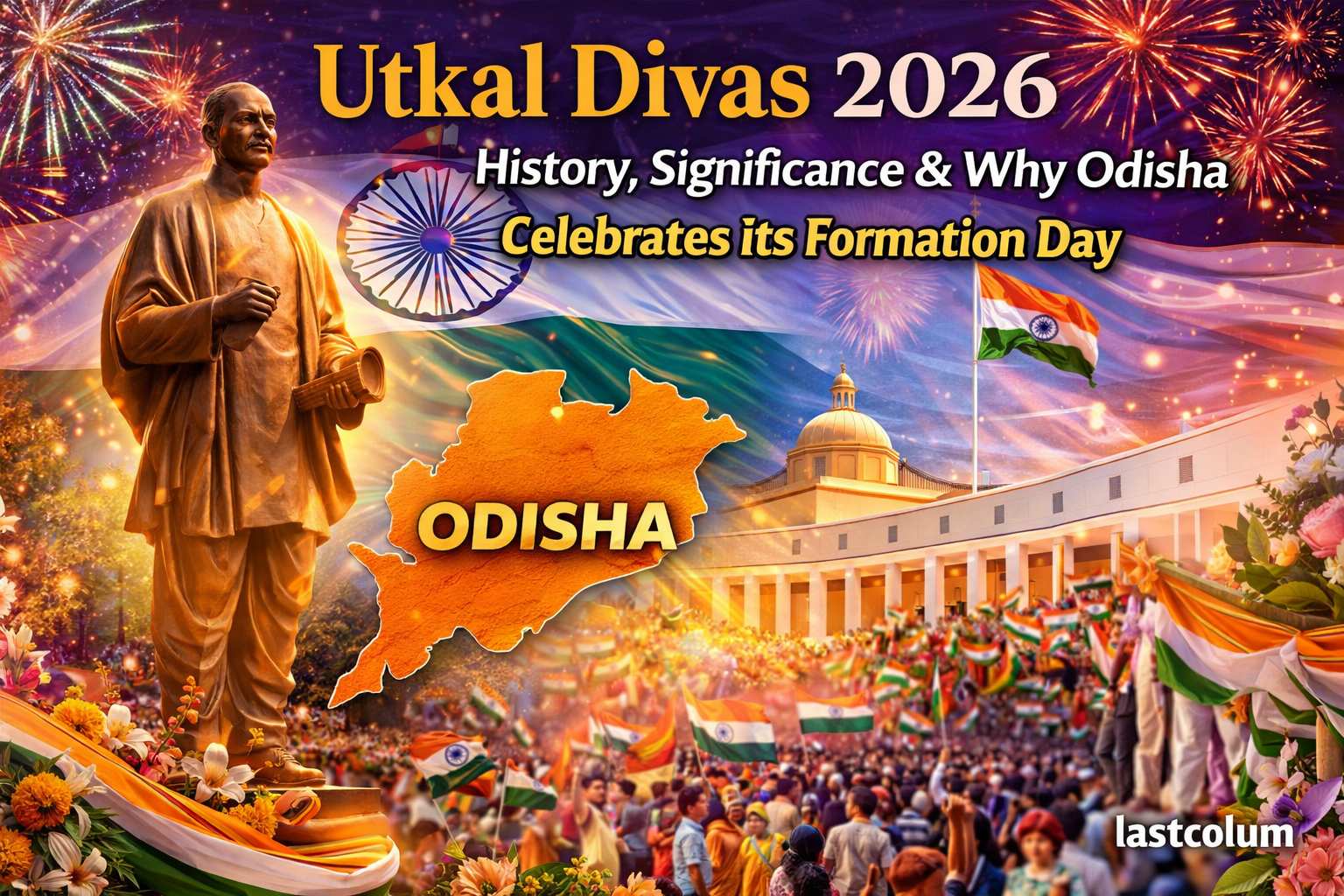
Today, April 1, 2026, Odisha marks its 90th Foundation Day. Utkal Divas 2026, its history, and its significance matter well beyond the state’s borders. This is the day Odisha became a separate province in 1936, making it the first state in India to be formed on a linguistic basis. No other state in India holds that distinction.
The celebration is not about a calendar date. It is about a decades-long struggle that gave the Odia people a distinct political and cultural identity.
The Historical Background
Before 1936, Odisha did not exist as a separate administrative unit. Under British rule, Odia-speaking regions were split across multiple provinces. The coastal districts sat within the Bihar and Orissa Province. The western districts of Koraput and Ganjam fell under the Madras Presidency. Odia-speaking people were administered by three different systems, with their language and culture subsumed under larger structures built for Bengal and Bihar.
The demand for a separate state took shape in the late 19th century. Utkal Sabha, formed in 1882, started the conversation. Utkal Sammilani, established in 1903, brought the demand into the open political arena. Over the next three decades, the movement built pressure that the British administration could no longer ignore.
The Leaders Who Made It Happen
Three names stand out in the movement for Odisha’s formation.
Madhusudan Das, known as Utkala Gouraba or the Pride of Odisha, was a lawyer and politician who became one of the most persuasive advocates for a separate Odia state. He argued the cultural coherence and administrative case for independence from larger provinces.
Gopabandhu Das, known as Utkalmani or the Jewel of Odisha, combined political organizing with social work. He built grassroots support and understood that statehood meant little without education and welfare for ordinary Odia people.
Fakir Mohan Senapati gave the movement its literary voice. His writing in Odia established the language as a serious literary medium at a time when its status was being questioned. A language that produces great literature is harder to dismiss as a basis for a state.
Together with Maharaja Krishna Chandra Gajapati and others, these leaders kept the movement alive across generations until it succeeded.
April 1, 1936: The Formation
On April 1, 1936, Odisha became a separate British Indian Province. Sir John Hubbuck became its first Governor. The new state initially had six districts: Cuttack, Puri, Balasore, Sambalpur, Koraput, and Ganjam. Today, Odisha has 30 districts.
The formation happened almost a decade before Indian independence, which makes it more significant. The Odia case succeeded within the colonial system purely on the argument of linguistic and cultural identity.
Furthermore, this success became a reference point for India’s later reorganization of states. When the States Reorganisation Act of 1956 reorganized India along linguistic lines, Odisha’s 1936 formation was the precedent that the argument had already worked.
How Odisha Celebrates Today
April 1 is a restricted public holiday across Odisha. Schools, colleges, and government offices hold programs. Students perform traditional Odia dance, music, and drama. Essay and debate competitions focus on Odisha’s history and figures. The state flag is hoisted at official venues.
Across cities and towns, decorated stalls, jhankis, and cultural programs run through the day. In the evening, fireworks light up the sky in many districts.
Moreover, the day carries emotional weight beyond ceremony. For Odia people living outside the state, whether in other Indian cities or abroad, Utkal Divas functions as a point of shared identity that the calendar makes concrete once a year.
Frequently Asked Questions(FAQs)
1. Why is Utkal Divas celebrated on April 1?
Odisha became a separate province on April 1, 1936 under British rule. That date marks the formal administrative creation of Odisha as a distinct state for Odia-speaking people. The date has been observed as Odisha’s Foundation Day every year since.
2. What makes Odisha’s formation historically unique in India?
Odisha was the first state in India to be formed on a linguistic basis. The principle of reorganizing administrative units around shared language was applied here in 1936, before Indian independence and before the States Reorganisation Act of 1956 applied the same logic nationwide.
3. Who were the key leaders behind the formation of Odisha?
Madhusudan Das (Utkala Gouraba), Gopabandhu Das (Utkalmani), and Fakir Mohan Senapati are the three most celebrated leaders of the Odisha formation movement. Maharaja Krishna Chandra Gajapati, Nilkantha Das, and Braja Sundar Das also played significant roles across different phases of the decades-long movement.
Other Articles

Which Jobs Will AI Never Replace? An Honest Answer
What Are the Biggest Fashion Trends of Spring 2026?