
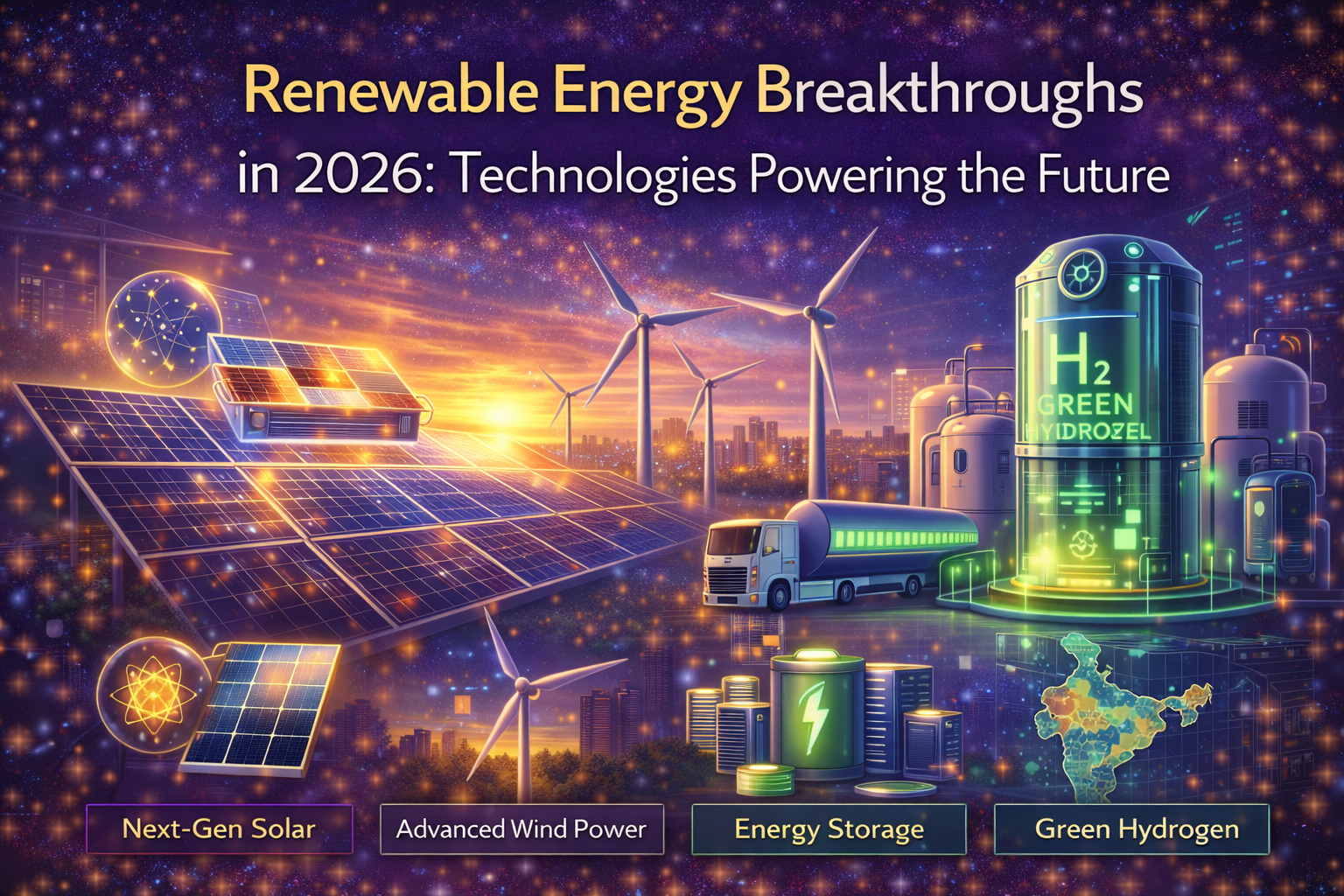
Energy systems across the world are changing faster than expected. Climate pressure, rising fuel costs, and new policies push innovation forward. Consequently, clean energy adoption accelerates across industries and households.
This article explores Renewable Energy Breakthroughs in 2026 that are reshaping how power is produced and consumed. It explains key technologies, real world impact, and why these advances matter now. Additionally, it shows how innovation moves renewable energy closer to mainstream dominance.
Why 2026 Is a Turning Point for Renewable Energy
The year 2026 marks a shift from experimentation to scale. Many technologies that once stayed in pilot stages now operate commercially. Consequently, renewable energy competes directly with fossil fuels on cost and reliability.
Governments support clean power through incentives and stricter emission rules. Additionally, private investment flows heavily into green infrastructure. Therefore, innovation receives both policy and financial backing.
Another reason is grid readiness. Smarter grids and storage systems now handle variable energy sources better. As a result, renewable power integrates smoothly into national networks.
Renewable Energy Breakthroughs in 2026: Key Technologies Leading the Change
Several technologies stand out in 2026. Each addresses a major limitation that slowed adoption in the past.
Major breakthroughs include:
- Next generation solar cells with higher efficiency and lower cost
- Advanced energy storage solutions improving grid stability
- Clean hydrogen production scaling beyond pilot projects
These advances work together rather than alone. Consequently, renewable systems become more dependable and flexible.
Solar Power Advances Beyond Traditional Panels
Solar energy remains the fastest growing renewable source. However, 2026 brings meaningful improvements beyond standard panels.
Perovskite and tandem solar cells achieve higher efficiency using fewer materials. Additionally, flexible and transparent panels expand installation options. Therefore, buildings, vehicles, and urban spaces generate power more easily.
Manufacturing improvements also reduce environmental impact. Consequently, solar power becomes cleaner across its entire lifecycle.
Solar farms now pair closely with storage. As a result, daytime production supports night time demand more effectively.
Wind Energy Gets Smarter and More Efficient
Wind power evolves through better design and digital control. Turbines grow taller and blades become lighter. Consequently, they capture more energy even in low wind conditions.
Offshore wind expands rapidly. Floating wind platforms open deep water locations previously unreachable. Additionally, maintenance costs drop due to predictive monitoring systems.
Wind energy now contributes steady base load power in many regions. Therefore, it supports grid reliability alongside solar.
Energy Storage Breakthroughs Solve Intermittency
Storage remains the backbone of renewable growth. Without it, clean energy struggles with reliability. However, 2026 delivers significant progress.
New battery chemistries reduce reliance on rare materials. Additionally, solid state batteries improve safety and lifespan. Consequently, storage systems scale faster and cheaper.
Key storage developments include:
- Long duration batteries supporting multi day storage
- Grid scale storage projects stabilizing renewable supply
- Decentralized storage for homes and communities
These solutions smooth energy supply and demand efficiently.
Green Hydrogen Moves Toward Commercial Scale
Hydrogen plays a growing role in sectors difficult to electrify. Steel, shipping, and aviation require dense energy sources. Consequently, green hydrogen gains attention.
In 2026, electrolyzers become more efficient and affordable. Renewable powered hydrogen production scales commercially. Additionally, transport and storage infrastructure improves steadily.
Green hydrogen supports energy storage and industrial decarbonization. Therefore, it complements solar and wind rather than competing with them.
Digital Technology and Smart Grids
Digital innovation supports renewable growth quietly but effectively. Smart grids balance supply and demand in real time. Consequently, grids handle variable sources smoothly.
Artificial intelligence predicts energy output and consumption patterns. Additionally, automation reduces outages and losses. Therefore, efficiency improves across the system.
Digital tools also empower consumers. Smart meters and apps help households optimize energy use and costs.
Economic and Social Impact of Clean Energy Growth
Renewable energy creates jobs and local investment. Manufacturing, installation, and maintenance require skilled labor. Consequently, clean energy supports economic growth.
Energy independence also improves. Countries reduce fuel imports and price volatility. Additionally, cleaner air benefits public health.
Communities gain access to decentralized power. Therefore, energy equity improves alongside sustainability.
Challenges That Still Remain
Despite progress, challenges exist. Grid upgrades require time and funding. Additionally, supply chains must scale responsibly.
Policy consistency matters. Sudden changes slow investment. Therefore, long term planning remains essential.
However, momentum favors continued improvement rather than reversal.
Clean energy innovation reached a new level of maturity. Technologies once considered experimental now power cities and industries.
Understanding Renewable Energy Breakthroughs in 2026 reveals how solar, wind, storage, and hydrogen converge into a resilient system. Additionally, digital tools and smart grids accelerate adoption. Consequently, renewable energy stands not as an alternative, but as the foundation of the future energy economy.
Frequently Asked Questions(FAQs)
1. What is the biggest renewable energy breakthrough in 2026?
Advanced energy storage stands out because it solves reliability issues across all renewable sources.
2. Is renewable energy cheaper than fossil fuels in 2026?
In many regions, yes. Solar and wind often deliver lower costs than coal or gas.
3. Will renewable energy fully replace fossil fuels soon?
Replacement will take time. However, renewables already dominate new power capacity additions globally.
Other Articles

What Is AI Safety and Why Does It Matter for Everyone in 2026?
Why Do Government Systems in India Often Move Slowly in 2026?