
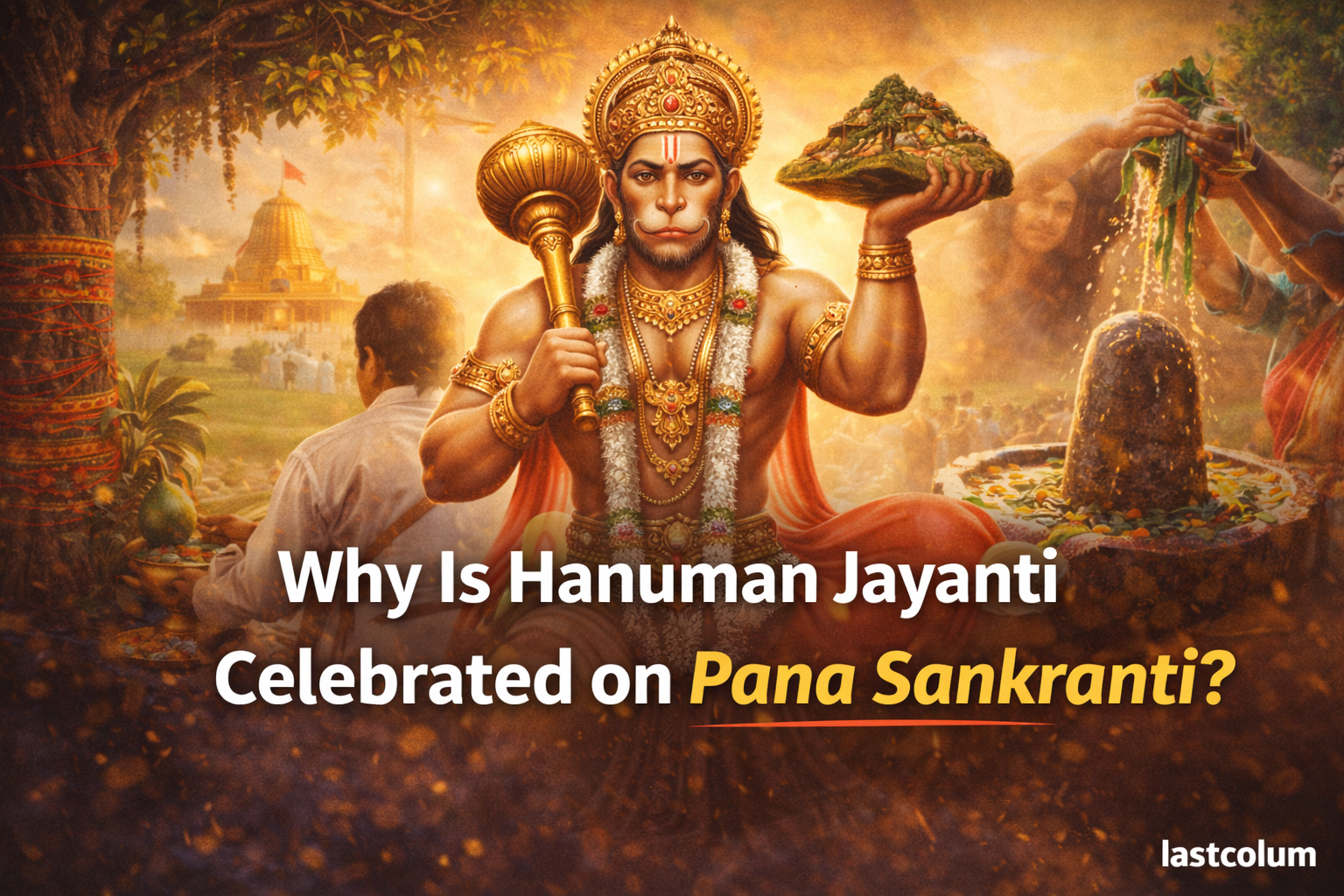
Hanuman Jayanti Pana Sankranti Odisha is a celebration unlike anything you find in the rest of India. Most states observe Hanuman Jayanti on the full moon day of the Chaitra month. Odisha does something different. Here, the birthday of Lord Hanuman falls on Pana Sankranti, which marks the first day of the Odia New Year. Two major occasions land on the same day, and the result is a celebration that runs deep into both faith and culture.
Understanding why this happens tells you a great deal about how Odisha reads its calendar, its scripture, and its identity.
What Is Pana Sankranti?
Pana Sankranti falls on the first day of Baisakha, the first month of the traditional Odia solar calendar. It usually arrives on April 14 or 15 each year. The word “Pana” refers to a sweet drink made from bael fruit, raw mango, water, jaggery, and sometimes curd or milk. People prepare this drink on the morning of the festival and offer it first to Lord Vishnu or Hanuman before drinking it themselves.
The day marks the transition of the sun into the Mesha or Aries zodiac sign. In Odisha, this solar event is treated as the beginning of a new year rather than a seasonal marker alone. It carries spiritual weight alongside its astronomical significance.
The Odia Calendar and Lord Hanuman’s Birth
Odisha follows a solar-based calendar called the Amli or Odia Panjika. This calendar places the birth of Lord Hanuman on Pana Sankranti rather than on Hanuman Jayanti as observed elsewhere. According to the Odia tradition, the scriptures and local puranic texts calculate Hanuman’s birth in alignment with the solar transition into Mesha.
This is not simply a regional error or local variation. It reflects a distinct scholarly tradition within Odia religious practice. Priests and scholars in Odisha have long maintained that this calculation aligns more accurately with certain Valmiki Ramayana references. Whether or not one accepts that argument, the tradition has held for centuries across the state.
How the Celebration Looks on the Ground
The day begins before sunrise. Devotees take a bath, often in a river or pond, and consider the water itself purifying on this particular morning. Hanuman temples across Odisha see long queues from early morning. The Panchamukhi Hanuman temple and several Ramayana-inspired shrines in Bhubaneswar, Cuttack, and Puri draw especially large crowds.
Priests perform special abishekam rituals on Lord Hanuman idols using panchamrit, which is a mix of milk, honey, curd, ghee, and sugar. Devotees recite the Hanuman Chalisa and Sundarakanda. Many observe a full day fast. Some men from certain communities carry decorated pots on their heads in procession, a practice linked to Lord Shiva worship but observed alongside the Lord Hanuman celebrations in some districts.
The Pana drink holds its own ceremony. Families hang earthen pots filled with Pana from neem trees outside their homes. Passersby drink from them freely. This act of sharing reflects the hospitality traditions of Odisha and turns the street itself into a site of offering.
What Connects Strength and Devotion on This Day
Lord Hanuman represents two things above all others: physical strength and absolute devotion. The combination of these qualities makes him particularly meaningful to working people, athletes, and those who seek courage in daily life.
On Pana Sankranti, the new year energy adds a layer to that meaning. Starting a new year by honoring Lord Hanuman is understood as an intention. You begin the year in service, in strength, and in clarity of purpose. The Pana drink itself supports this reading. Bael fruit is known to cool the body during the summer heat that arrives around this time. The drink is practical and symbolic together.
Odisha holds this day tightly because it ties the divine calendar to the natural one. That connection is what makes the celebration feel specific to this land.
Frequently Asked Questions(FAQs)
- Why does Odisha celebrate Hanuman Jayanti on Pana Sankranti instead of the full moon?
Odisha follows the Amli solar calendar, which places Hanuman’s birth on the first day of Baisakha. This differs from the lunar calendar used in most other states. The Odia religious tradition ties this date to solar calculations that align with certain Ramayana texts. The practice has continued for centuries and is considered the authentic date within Odia Vaishnavite and Shaivite scholarship.
2. What is the significance of the Pana drink on Pana Sankranti?
The Pana drink is made from bael fruit, raw mango, jaggery, and water. It is offered to deities first, then shared freely among community members. The bael fruit has cooling properties suited to the rising summer heat around mid-April. The act of sharing Pana from pots hung outside homes reflects the Odia tradition of communal generosity, known locally as Paropakara.
3 .Which Hanuman temples are most visited in Odisha on Pana Sankranti?
Major temples in Bhubaneswar, Cuttack, and Puri see the largest gatherings. The Panchamukhi Hanuman temple in Bhubaneswar is among the most visited. Temples located near riverbanks attract additional crowds because devotees combine ritual bathing with temple visits on this day.
Other Articles

How Do Trump Tariffs 2026 Affect Consumers Worldwide?
How Indian Brands Use Meme Marketing to Sell More